
Last updated September 10, 2026
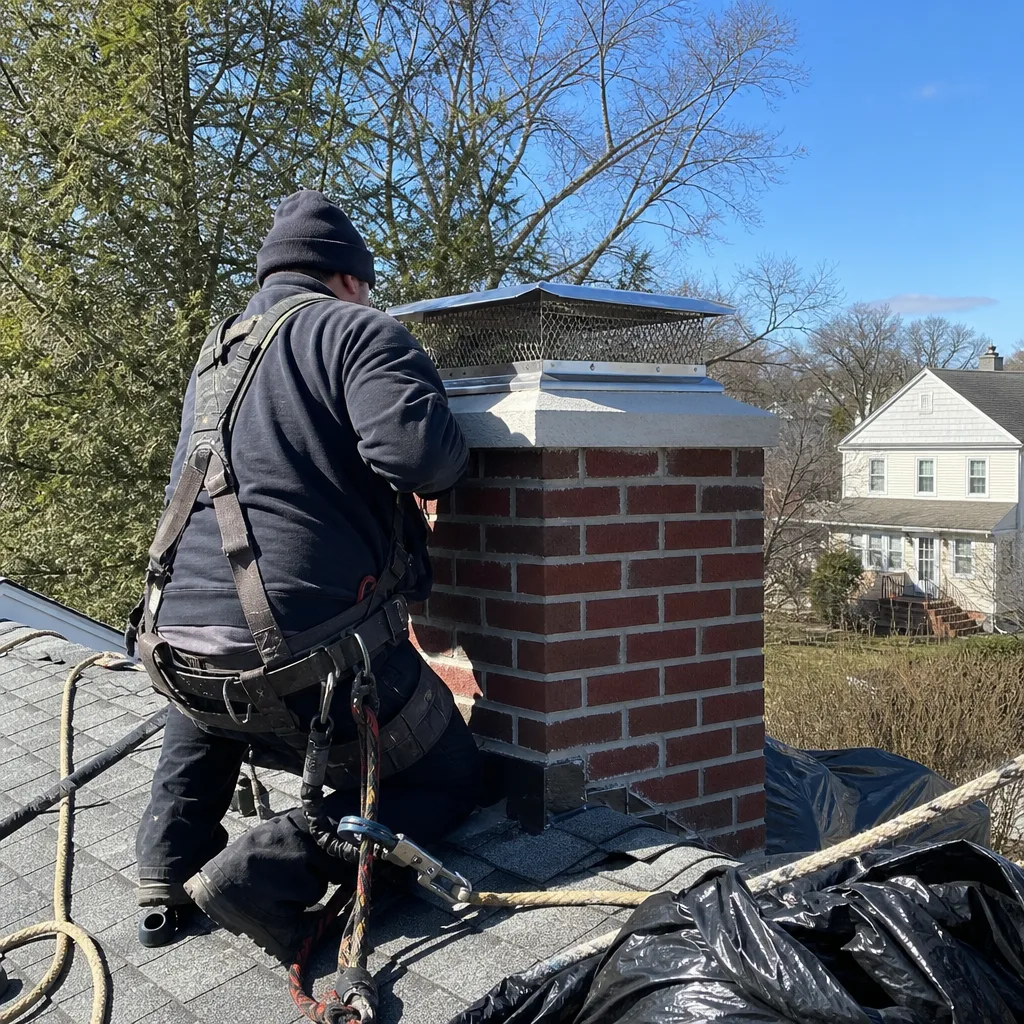
Level 1 sweep and inspection to the NFPA 211 annual standard - flue, crown, cap, and flashing checked and photographed
Chimney sweep logs do not sweep chimneys. They loosen some creosote - which then falls where a brush and vacuum still have to collect it.
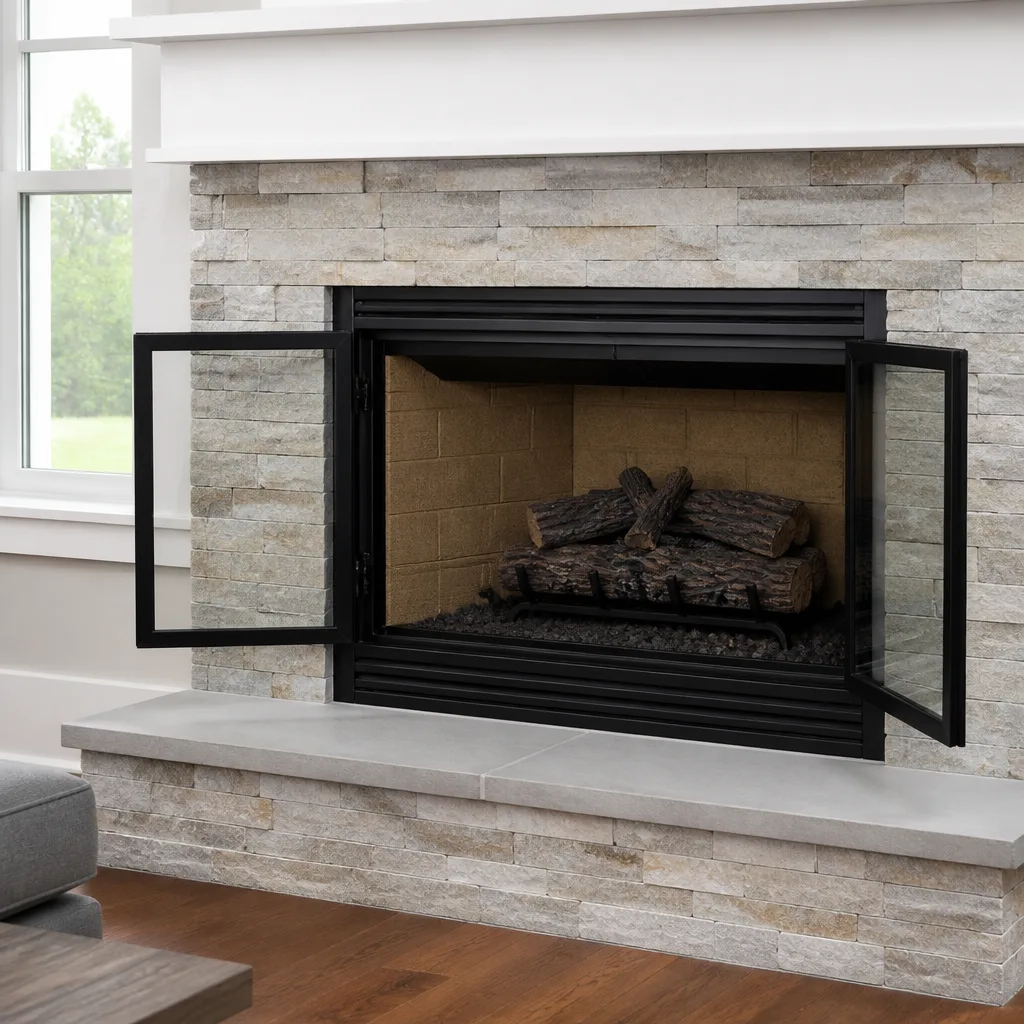
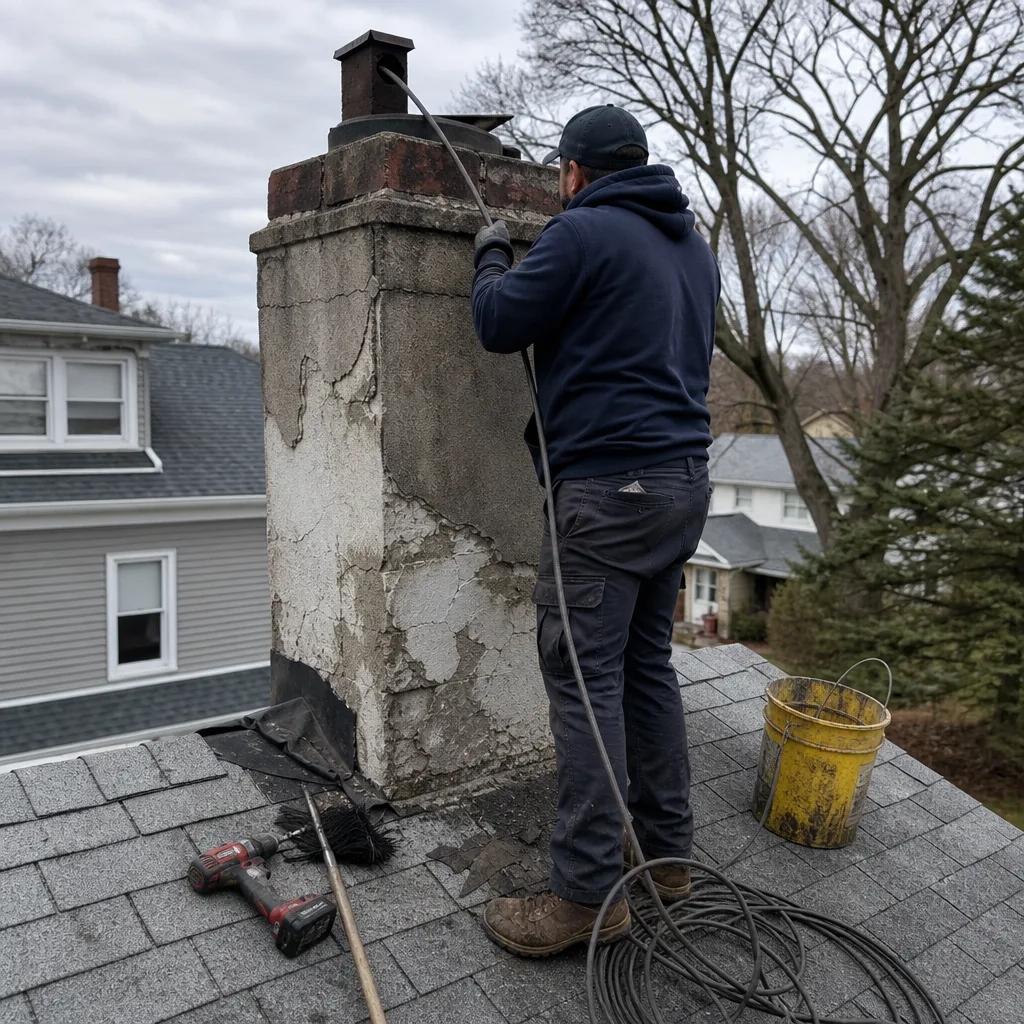 Before
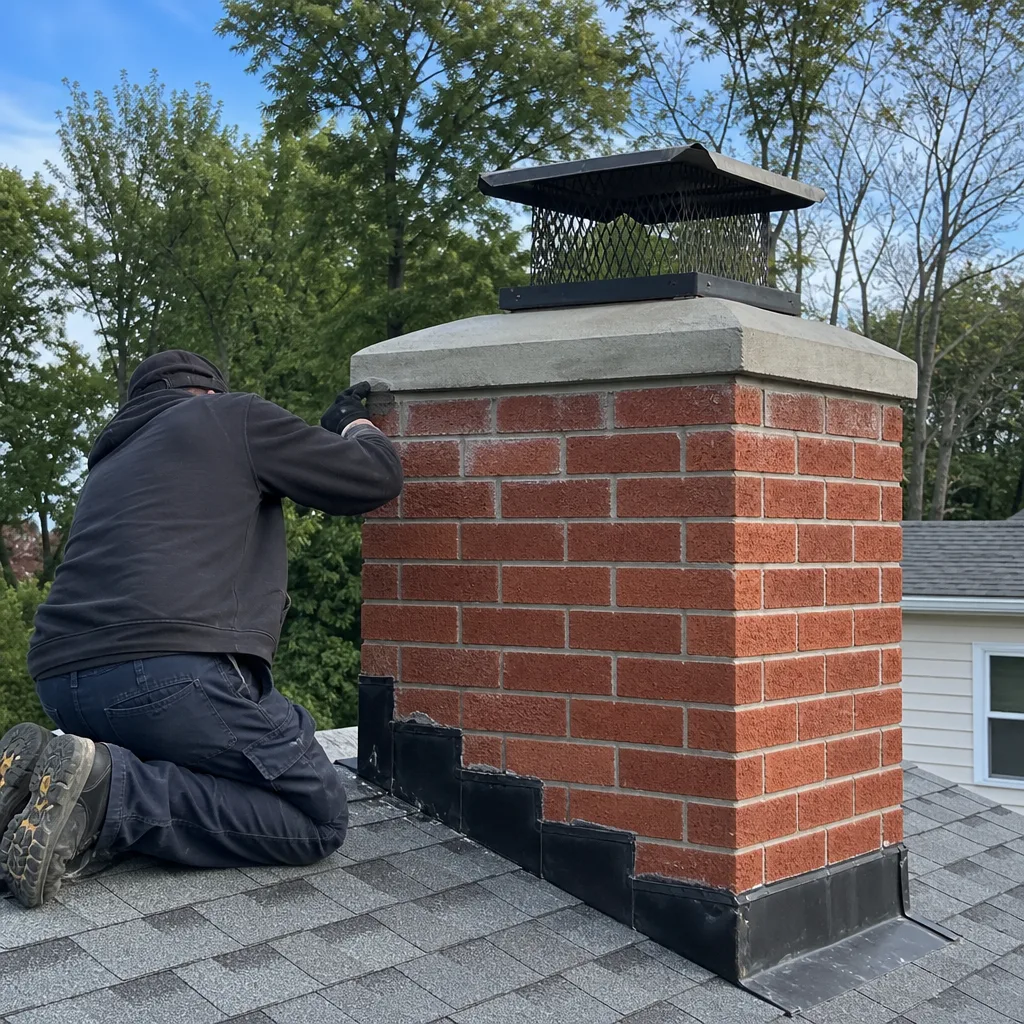 After
After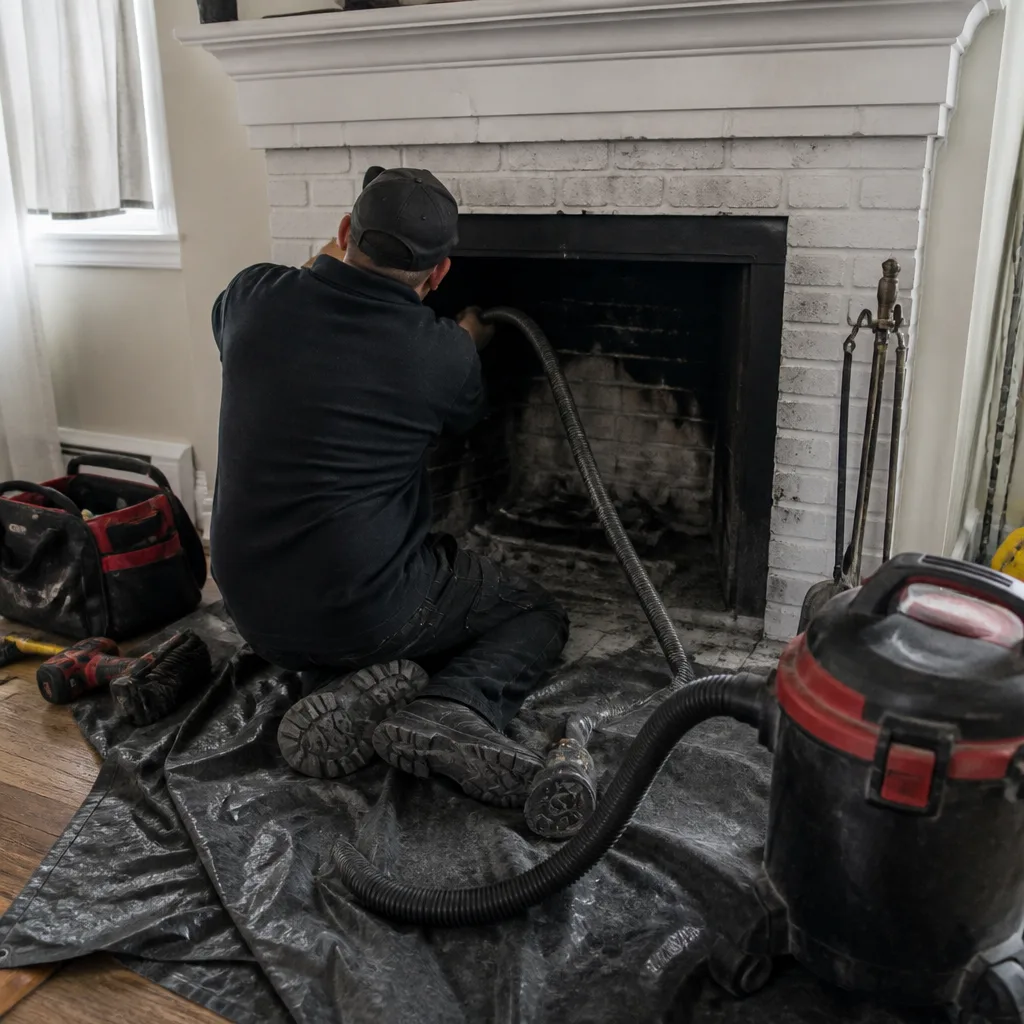 Before
 After
After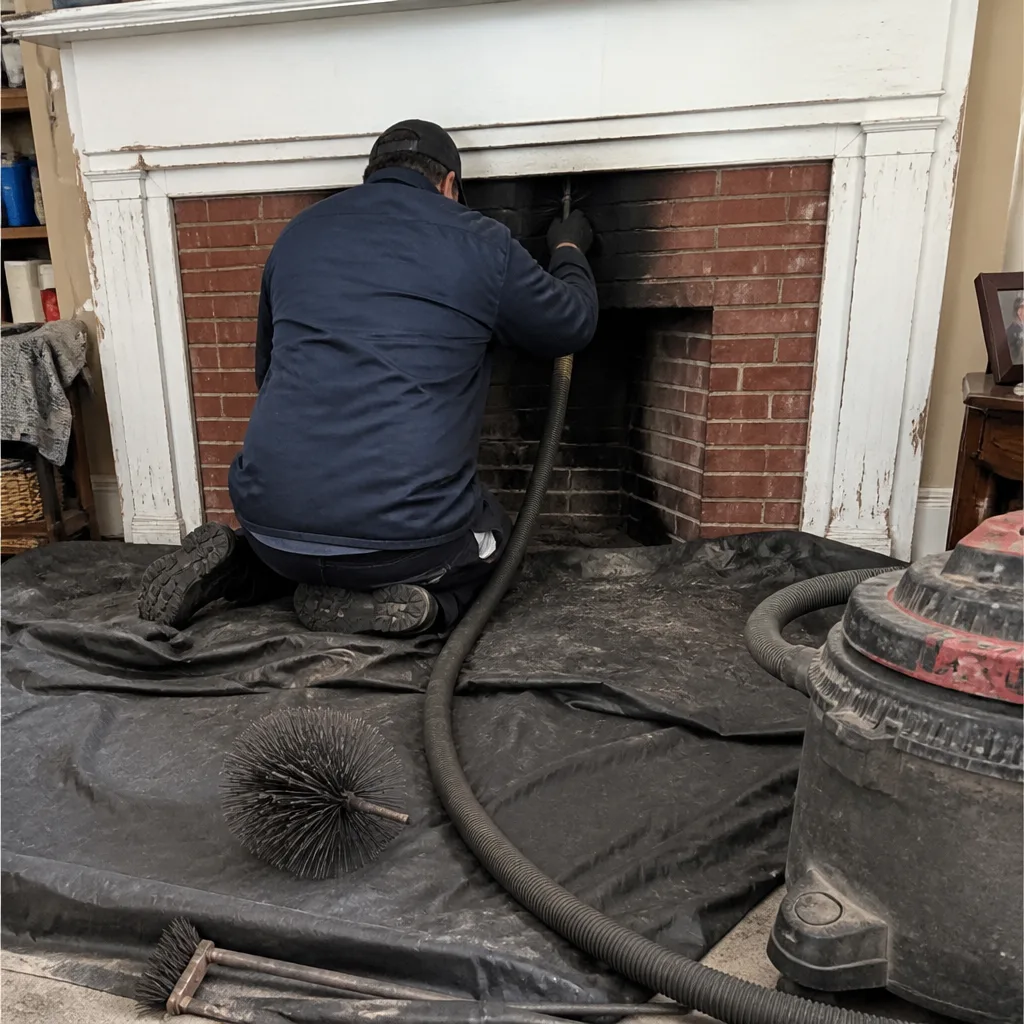 Before
 After
AfterThe Complete Guide to Chimney Cleaning in Mount Vernon
Mount Vernon carries more pre-1950 housing stock than most Westchester County cities, and thousands of those chimneys were built before modern liner standards existed. We see them every week: flues serving oil-converted-to-gas systems, still running through terracotta liners never meant for the job, or in some cases running through no liner at all. A brush-and-go sweep never catches this. That’s why most seasonal chimney cleaning guides fail Mount Vernon homeowners - they treat a 1920s brick rowhouse on South Columbus Avenue the same as a 2005 colonial in Pelham Manor. In this guide, you’ll learn how Mount Vernon’s specific building history, fuel conversion patterns, and coastal-inland weather cycles determine what your chimney actually needs, how often it needs it, and what a proper cleaning report should include.
Quick Answer
Professional chimney cleaning in Mount Vernon, New York typically costs between $175 and $325 for a standard sweep with Level 1 inspection, and $350 to $550 for a Level 2 camera inspection with photo documentation. For help choosing the right approach, see our DIY vs Professional Chimney Cleaning: The Mount Vernon Homeowner’s Decision Guide. Most Mount Vernon homes with active fireplaces or heating appliances need annual cleaning, though oil-to-gas conversions and pre-1950 masonry chimneys often require more frequent assessment due to liner compatibility issues. A proper cleaning includes debris removal, flue evaluation, and written documentation - not just a vacuum and a handshake.
Table of Contents
- Why Mount Vernon Chimneys Are Different
- What Happens During a Professional Chimney Cleaning
- Level 1 vs. Level 2 Inspection: When You Need Each
- How Often Should You Clean Your Chimney in Mount Vernon?
- Understanding the Real Cost of Chimney Cleaning
- Oil-to-Gas Conversions: The Hidden Problem
- What Photo Documentation Actually Shows
- Choosing a Chimney Sweep in Mount Vernon
Why Mount Vernon Chimneys Are Different
Walk the neighborhoods of Fleetwood, Chester Heights, or the estates along Lorraine Avenue and you’ll notice something the national chimney guides never mention: Mount Vernon’s housing stock spans nearly 140 years of construction, often on the same block. A 1910 brick rowhouse sits beside a 1960 split-level, which sits beside a 1989 townhouse conversion. Each era used different masonry techniques, different flue dimensions, and critically, different expectations about what would flow through that flue.
The pre-1950 buildings that dominate Mount Vernon’s core were built for coal and later converted to oil. The terracotta flue tiles in those chimneys - when they’re present at all - were sized for the draft characteristics of oil combustion. When Westchester’s oil-to-gas conversion wave hit in the 1980s and 1990s, many Mount Vernon homeowners switched fuels without relining. Gas burns cooler and wetter than oil. The original flue, often already compromised by decades of sulfuric acid condensation from oil, now faces a completely different thermal and chemical stress profile.
We see the results in our inspections. In the Fleetwood neighborhood near the Bronx border, we regularly find flues with spalled terracotta, missing mortar joints, and in some cases, gaps between the flue and surrounding brickwork that allow combustion gases to leak into wall cavities. These aren’t rare failures. They’re predictable consequences of fuel-switching without proper engineering.
Mount Vernon’s geography compounds the issue. The city sits on a ridge roughly 100 feet above sea level, with the Hutchinson River Parkway running through its eastern edge and the Bronx River forming part of its western boundary. This creates localized humidity patterns - higher moisture content in summer air, faster temperature drops in winter - that accelerate freeze-thaw damage to exterior masonry and increase condensation inside flues. A chimney in Mount Vernon faces different weather stress than one in White Plains or Yonkers, even though they’re all Westchester County.
The building code history matters too. Mount Vernon adopted the National Fuel Gas Code requirements for liner sizing later than some neighboring municipalities, meaning conversions completed in the 1990s or early 2000s sometimes escaped proper inspection. We’ve cleaned chimneys on South Fulton Avenue where the gas appliance was installed by a heating contractor who never pulled a permit, never inspected the flue, and simply connected the new furnace to the old thimble. The homeowner called us twenty years later because of a persistent soot smell. The flue was unlined, deteriorated, and actively leaking carbon monoxide into the basement.
This is why a Mount Vernon chimney cleaning can’t be generic. The sweep needs to know what they’re looking at, what era it comes from, and what might have been done to it - or not done - during previous fuel conversions.
What Happens During a Professional Chimney Cleaning
A proper chimney cleaning follows a sequence that protects your home, documents the flue condition, and leaves you with information you can use. Here’s what happens when we arrive at a Mount Vernon home:
- Interior protection. We lay drop cloths from the front door to the hearth area, seal the fireplace opening with a vacuum-connected containment system, and cover nearby furniture. Soot is abrasive and acidic; it doesn’t belong on your floors or in your HVAC system.
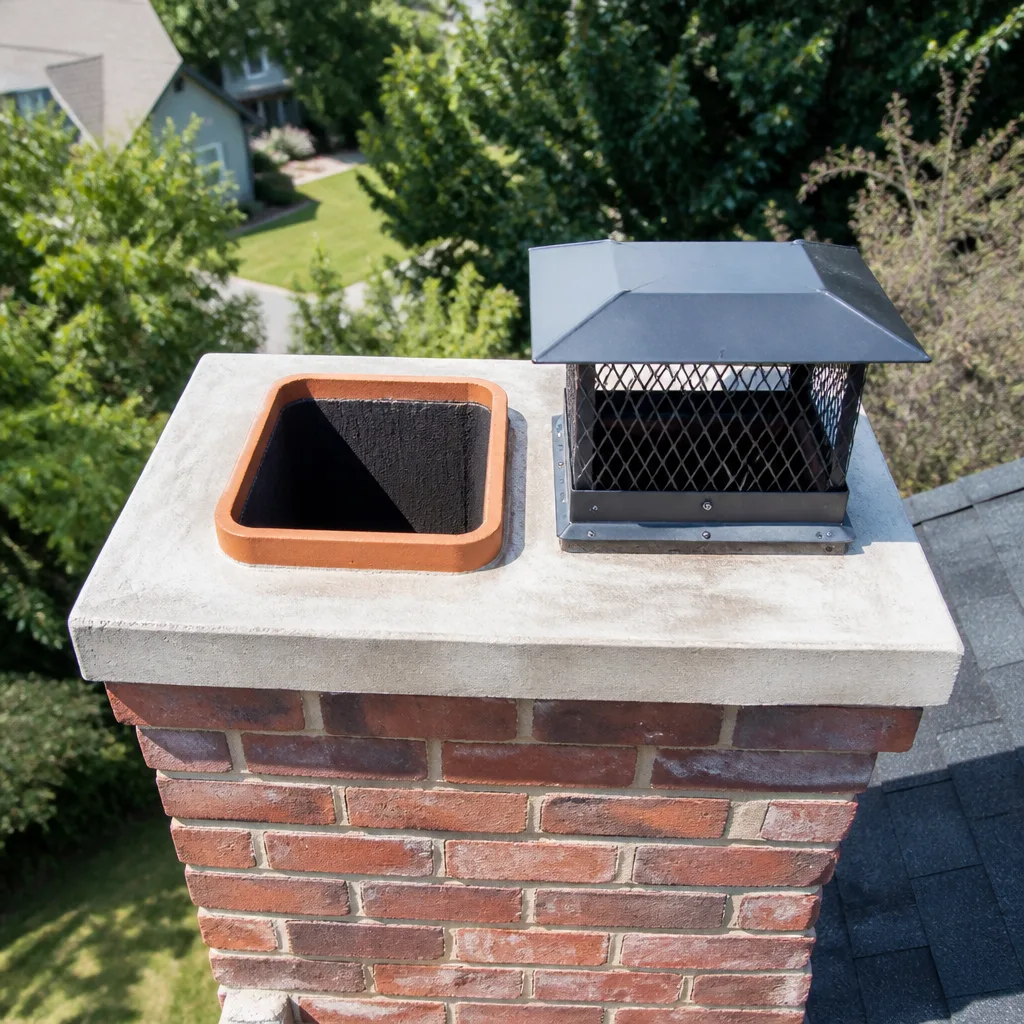
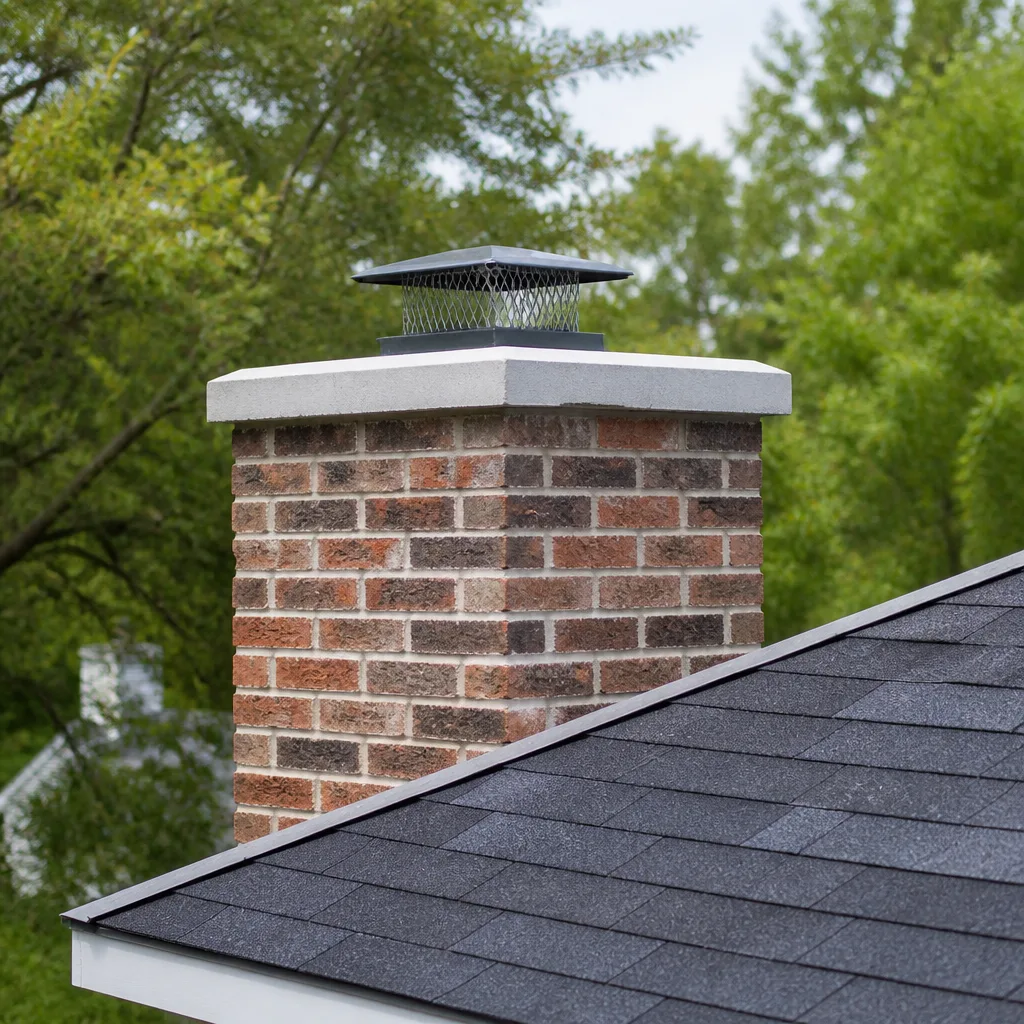
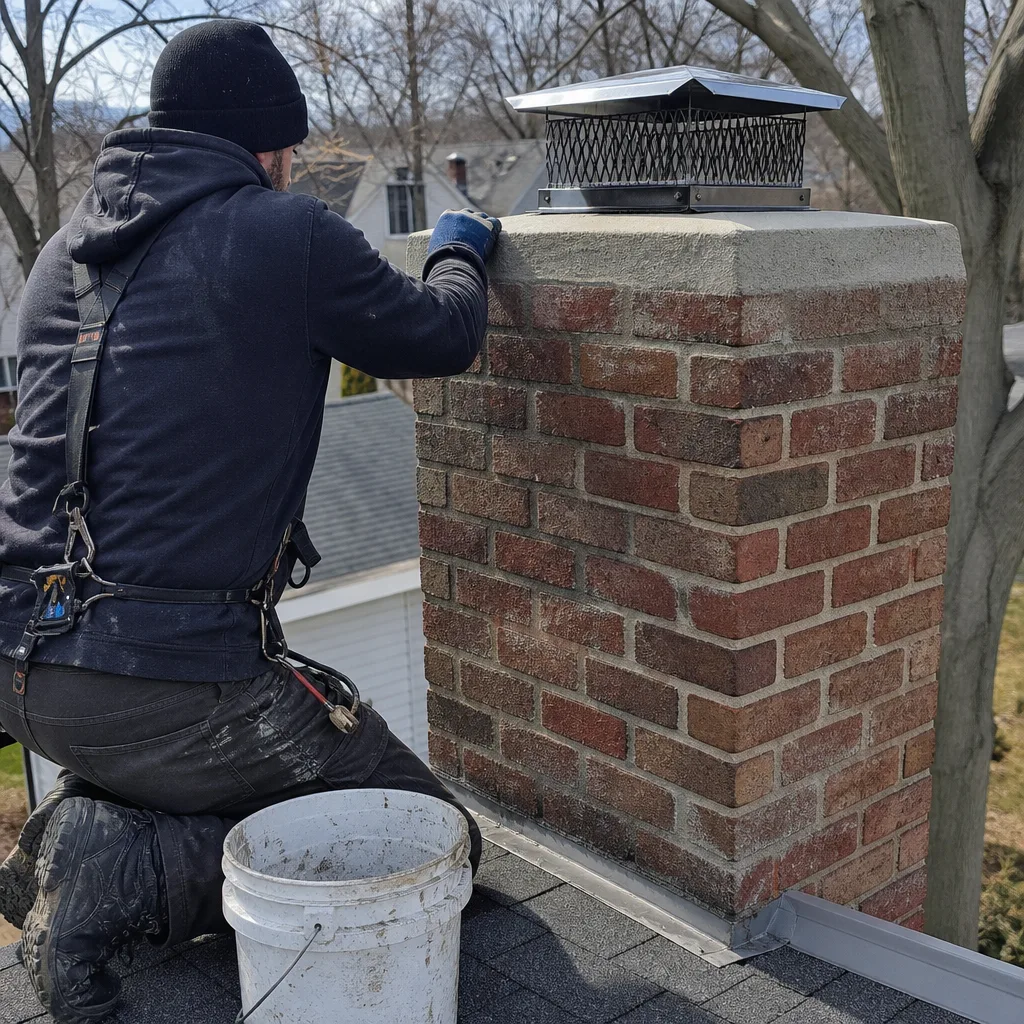
- Exterior assessment. Before touching the flue, we examine the chimney crown, cap, flashing, and visible masonry from the roof or ladder. In Mount Vernon’s older stock, we’re looking for crown deterioration, missing or improper caps, and flashing gaps that allow water behind the brick. These exterior problems cause interior damage that no amount of flue brushing fixes.
- Flue cleaning with appropriate tools. We select brush type and rod material based on flue lining - polypropylene for metal liners, wire for unlined masonry when appropriate, and specialized whips for heavy glazed creosote. The tool must match the flue. Using a wire brush on a stainless liner damages it. Using polypropylene on glazed creosote barely touches it.
- Debris removal and vacuuming. All loosened material is captured at the containment unit and removed from your home. We don’t leave soot bags in your trash can.
- Combustion appliance zone inspection. We examine the connection between your furnace, boiler, or fireplace and the flue system. In Mount Vernon, this is where we often find the oil-to-gas conversion issues: improper connector sizing, missing or damaged thimbles, and dangerous clearances to combustibles.
- Documentation and reporting. Every cleaning ends with a written report. For Level 1 inspections, this describes what was found and what was done. For Level 2 inspections, it includes photographs and a plain-English verdict on flue condition, liner integrity, and any recommended repairs with priority ranking.
The entire process typically takes 60 to 90 minutes for a standard cleaning, or 2 to 3 hours when camera inspection is included. Most jobs are completed in a single visit. Our technicians are background-checked and uniformed, and we provide no-hassle upfront pricing - the number on the estimate is the number on the invoice.
What separates a proper cleaning from a cut-rate sweep is what happens between steps 3 and 6. Anyone can run a brush up a flue. The question is whether they know what they’re seeing, whether they document it, and whether they explain it in terms you can act on.
Level 1 vs. Level 2 Inspection: When You Need Each
The National Fire Protection Association defines three levels of chimney inspection. For Mount Vernon homeowners, Levels 1 and 2 are the relevant ones. Understanding the difference protects you from both under-inspection and unnecessary upselling.
Level 1 Inspection is a visual examination of readily accessible portions of the chimney exterior, interior, and connecting appliance. No tools are used to open panels or access concealed areas. This is appropriate when:
- Your appliance and fuel type haven’t changed
- You’re keeping the same cleaning schedule as previous years
- No chimney fire, lightning strike, or seismic event has occurred
- The chimney is relatively new and has no known problems
For many Mount Vernon homeowners with post-1980 construction, consistent maintenance history, and no fuel changes, an annual Level 1 with cleaning is sufficient.
Level 2 Inspection adds internal camera examination of the flue and accessible portions of the appliance and chimney connection. It requires specialized equipment and training. You need a Level 2 when:
- You’re buying or selling the home
- The fuel type has changed (oil to gas, wood to pellet, etc.)
- The appliance has been replaced
- There’s been a chimney fire, lightning strike, or significant weather event
- The flue is unlined, clay-lined, or of unknown construction
- You’ve experienced performance problems: smoking, odors, moisture, or draft issues
In Mount Vernon, we recommend Level 2 inspection for any pre-1960 chimney, any oil-to-gas conversion without documented relining, and any chimney that hasn’t been professionally examined in more than three years. The camera reveals what visual inspection cannot: cracked flue tiles, gaps in mortar joints, creosote buildup patterns that indicate draft problems, and liner displacement.
Our Level 2 inspections use high-resolution camera systems that record the entire flue length. You receive the photos, not just our interpretation of them. In our experience, a homeowner who can see a cracked flue tile or a gap where combustion gases are escaping into the chimney wall makes better decisions than one relying on a verbal “looks fine” or “needs work.” Photos you can see, a plain-English verdict.
The cost difference between Level 1 and Level 2 is typically $175 to $250, but the information difference is often the difference between scheduled maintenance and emergency repair. We’ve found deteriorated liners in Mount Vernon chimneys that would have failed catastrophically within a season. Catching them early meant a relining job. Missing them would have meant a chimney fire, carbon monoxide exposure, or structural damage requiring rebuild.
How Often Should You Clean Your Chimney in Mount Vernon?
The generic advice - “once a year” - isn’t wrong, but it’s incomplete. Frequency depends on what you burn, how you burn it, and what your chimney was built to handle. Here’s our Mount Vernon-specific guidance:
| Fuel Type & Use Pattern | Recommended Cleaning Frequency | Mount Vernon-Specific Notes |
|---|---|---|
| Wood-burning fireplace, occasional use (1-2x/week) | Annual | Hardwoods reduce creosote; pine and unseasoned wood common in Westchester increase it |
| Wood-burning fireplace, primary heat source | Every 50 fires or mid-season | Mount Vernon’s older fireplaces often have shallow fireboxes that overfire; inspect more frequently |
| Gas fireplace, decorative | Every 2-3 years | Check for debris blockage, animal nests; ceramic logs degrade and can clog ports |
| Gas furnace/boiler, original liner | Annual | Critical for pre-1990 oil-to-gas conversions; condensing gases accelerate liner deterioration |
| Gas furnace/boiler, new stainless liner | Every 1-2 years | Inspect annually if appliance is high-efficiency; lower flue temps increase condensation risk |
| Oil furnace/boiler | Annual | Sulfur content in heating oil produces corrosive deposits; fewer oil systems remain in Mount Vernon |
| Pellet stove | Annual or per manufacturer | Clean exhaust vent and combustion chamber; ash accumulation affects efficiency |
Mount Vernon’s climate adds a seasonal consideration. The heating season runs roughly October through April, with the heaviest use in January and February when temperatures drop into the teens. We recommend scheduling cleaning in late summer or early fall, before the rush. You’ll get better appointment availability, and any needed repairs can be completed before the first cold snap.
Homes near the Hutchinson River or in lower-elevation areas like the southeast neighborhoods see more moisture intrusion. If your chimney has no cap, or a deteriorated crown, annual inspection is prudent even with light use. Water damage progresses faster than creosote buildup, and it’s harder to reverse.
For homeowners in the Chester Heights or Fleetwood areas with original 1920s construction, we suggest treating “annual” as a minimum, not a target. These chimneys have endured a century of freeze-thaw cycles, fuel changes, and in some cases, deferred maintenance across multiple owners. A Level 2 inspection every two to three years, even with annual cleaning, provides the documentation you need to track condition over time.
Understanding the Real Cost of Chimney Cleaning
Price transparency matters, especially for homeowners who’ve been burned by contractors before. Here’s what chimney cleaning costs in Mount Vernon’s market, with the factors that move the number up or down:
- Standard sweep with Level 1 inspection: $175-$325. This covers most routine maintenance for lined chimneys in good condition with straightforward access.
- Level 2 inspection with camera and photo report: $350-$550. Includes everything in Level 1 plus full flue video documentation and written assessment.
- Heavy creosote removal (Stage 2 or 3): Add $150-$400. Glazed creosote requires chemical treatment and mechanical removal; it’s labor-intensive and cannot be rushed.
- Chimney fire or major debris removal: $400-$800+. Depends on extent of damage and whether structural assessment is needed.
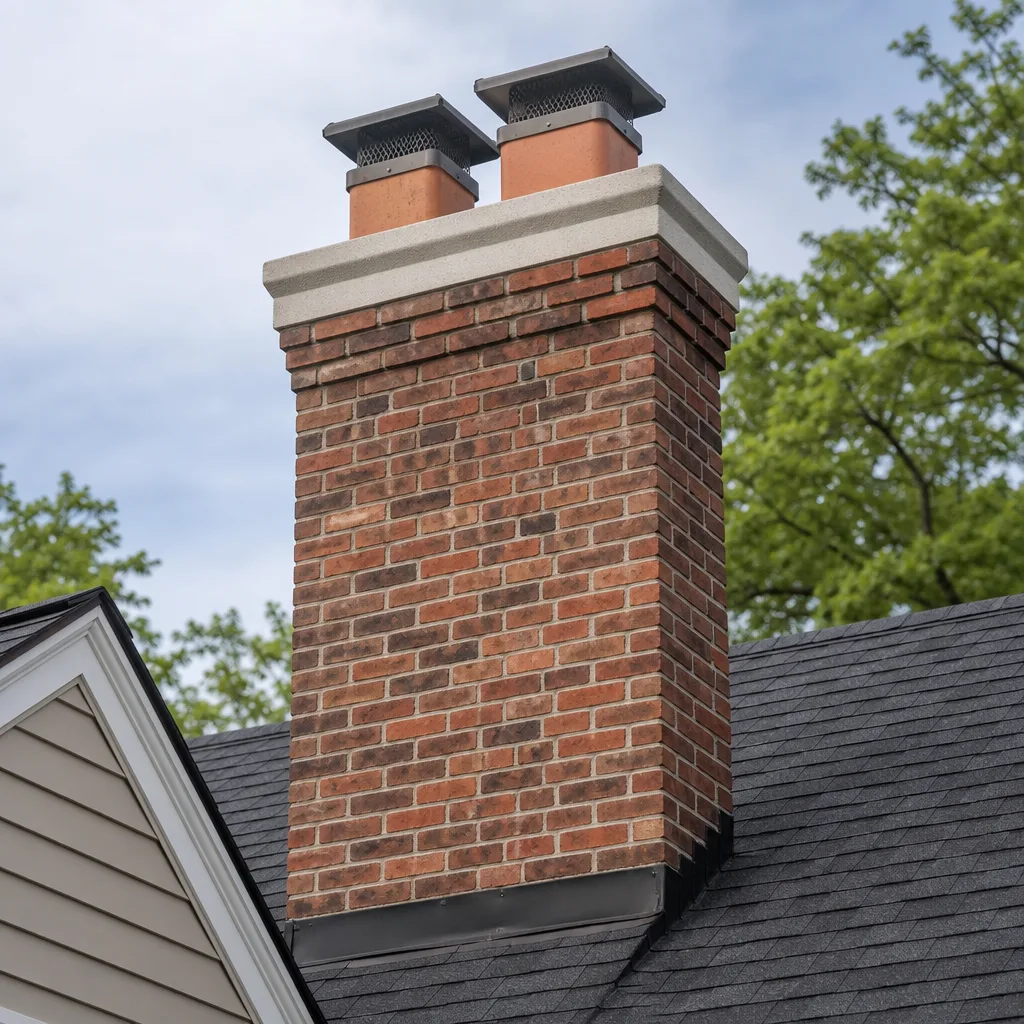
- Multi-flue structures: Per-flue pricing, typically 15-25% discount for additional flues cleaned same visit.
What drives cost variation in Mount Vernon specifically:
Access difficulty. Some rowhouses on South Columbus or East Lincoln have chimneys accessible only through narrow passages or with specialized ladder setups. Steep roofs, especially on the older Victorian-era homes in the southern neighborhoods, require additional safety equipment and time.
Flue condition. A lined, straight flue in good condition cleans quickly. An unlined, offset, or partially collapsed flue requires careful work and often reveals needs that must be documented.
Appliance configuration. Furnaces and boilers in Mount Vernon’s basements are sometimes installed in tight mechanical rooms with limited clearance. Disconnecting and reconnecting properly takes time. We don’t rush it. Done right - and we stand behind it.
Our standing offers include $50 off any repair over $250, a free second opinion on any written estimate, an $89 seasonal tune-up, and a permanent 5% senior and veteran discount. We provide no-hassle upfront pricing before any work begins. The number on the estimate is the number on the invoice.
Be wary of prices significantly below this range. We’ve been called to homes where a “$99 special” left soot throughout the living room, damaged the damper, or simply never happened - the “sweep” ran a brush for ten minutes and collected payment. In chimney work, as in most trades, the cheapest option often costs the most.
Oil-to-Gas Conversions: The Hidden Problem
Between 1985 and 2005, thousands of Mount Vernon homeowners converted from oil to natural gas heating. The economics were compelling: gas was cheaper, cleaner-burning, and didn’t require delivery trucks. What many didn’t realize, and what some heating contractors failed to address, was that the new appliance required a different flue environment.
Oil combustion produces higher flue gas temperatures and different residue patterns than gas. The terracotta flue tiles common in pre-1970 Mount Vernon construction were engineered for oil’s thermal profile. Gas burns cooler and produces more water vapor. When that cooler, wetter exhaust meets an oversized flue designed for oil, the gases cool too quickly, condense on flue walls, and create acidic moisture that attacks mortar joints and terracotta.
The National Fuel Gas Code specifies minimum flue sizes based on appliance input rating, flue height, and lateral run. A gas furnace connected to a flue sized for an oil boiler is often technically oversized. The result is chronic condensation, accelerated deterioration, and in some cases, dangerous flue gas spillage into the home.
We’ve inspected chimneys on East Sidney Avenue where the terracotta liner has literally dissolved from decades of condensate exposure. The homeowner never knew because the furnace “worked fine” and no previous sweep had used a camera. By the time we found it, the liner was gone in sections and the surrounding brickwork was compromised.
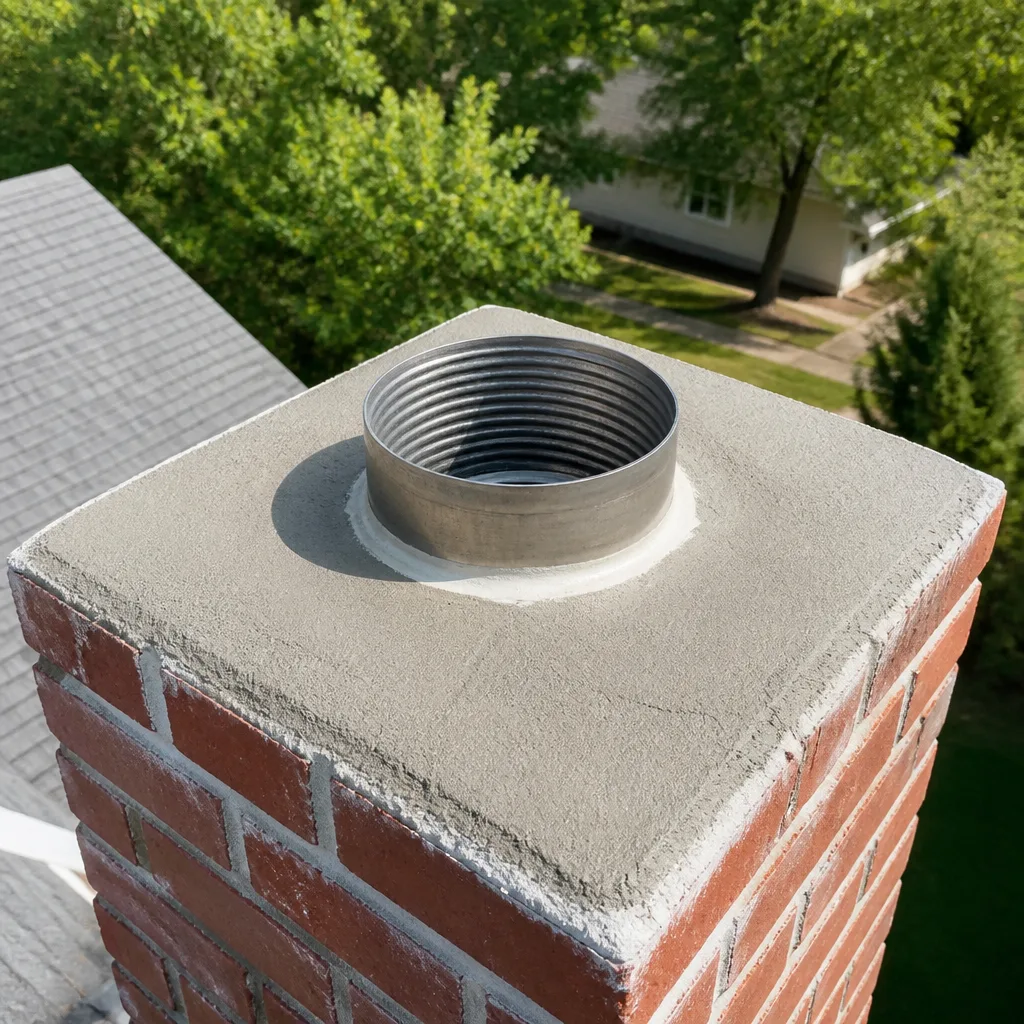
The proper solution for many oil-to-gas conversions is a stainless steel liner sized specifically for the new appliance. We install liners from DuraFlex and Olympia Chimney, both industry-trusted brands with proper UL listings. The liner reduces flue diameter to match gas appliance requirements, maintains proper draft, and protects the original masonry from condensate damage.
If your Mount Vernon home was converted from oil to gas and you don’t have documentation of relining, assume the flue was not properly adapted. A Level 2 inspection will confirm it either way. This isn’t upselling. It’s basic engineering that was skipped by someone twenty years ago, and the consequences land on the current homeowner.
We document everything with photos and provide a plain-English verdict. If the liner is intact and properly sized, we’ll say so. If it’s deteriorated or absent, we’ll show you exactly where and explain what it means for safety and function. No work is recommended without camera evidence you can see for yourself.
What Photo Documentation Actually Shows
A verbal report from a chimney sweep is worth little. “Looks good” or “needs work” gives you nothing to verify, nothing to compare year over year, and no basis for deciding between competing recommendations. Photo documentation changes this entirely.
In our Level 2 inspections, the camera captures the full circumference of the flue at multiple elevations. Here’s what we’re looking for and what it means for your Mount Vernon home:
- Cracked or spalled flue tiles. Terracotta tiles crack from thermal shock, freeze-thaw cycles, or structural settling common in Mount Vernon’s older masonry. A crack allows combustion gases and sparks to reach combustible framing. We mark the elevation and severity of each crack in our report.
- Missing mortar joints. In unlined or partially lined flues, the mortar between brick courses erodes over time. Gaps allow gas leakage and reduce structural integrity. We measure gap width and extent.
- Creosote buildup patterns. Even, light coating indicates normal operation. Heavy buildup near the top suggests draft problems, often from an oversized flue or chimney height issue. Glazed, hardened creosote indicates past chimney fire or sustained overfiring. The pattern tells us as much as the amount.
- Liner displacement or gaps. Stainless steel liners can shift from proper position, especially if improperly supported or if the chimney has experienced settling. Gaps at connections allow leakage at the most dangerous point - where flue gases are hottest and most concentrated.
- Moisture staining and efflorescence. White powdery deposits on masonry indicate water penetration. In Mount Vernon’s climate, this accelerates rapidly. We trace the source - cap, crown, flashing, or porous brick - and document progression.
- Obstructions and debris. Bird nests, collapsed liner sections, construction debris from past work, and fallen masonry all appear clearly on camera. Some obstructions are removable during cleaning. Others indicate structural problems requiring repair.
The photos become your baseline. Next year’s inspection shows whether conditions are stable, improving, or deteriorating. This is how you avoid both emergency repairs and unnecessary work. A flue with minor cracking that hasn’t changed in three years may need monitoring, not immediate relining. A flue with new displacement or widening gaps needs attention before the next heating season.
We provide the photos with our written report, stored digitally for your records. In our experience, homeowners who understand what they’re looking at make better decisions, trust the process more, and never feel pressured. Photos you can see, a plain-English verdict.
Choosing a Chimney Sweep in Mount Vernon
The chimney service industry in Westchester County includes national franchises, independent operators, and seasonal workers who appear when leaves fall and disappear when snow melts. Here’s how to distinguish professional service from the alternatives:
Verify certification and insurance. Look for CSIA (Chimney Safety Institute of America) certification as a minimum. Ask for proof of general liability and workers compensation insurance. Uninsured workers on your roof or in your home create liability you don’t want. We carry both, and we provide documentation on request.
Demand photo documentation. Any sweep recommending significant work should show you exactly why. If they can’t or won’t produce camera images, get a second opinion. Our chimney repair in Mount Vernon assessments always include photographic evidence before any repair recommendation.
Check local reputation and longevity. A company that’s been in business ten years has survived on repeat customers and word of mouth. One that’s been here forty-two years, as Hearthstone has, has demonstrated consistent quality across multiple generations of homeowners and multiple economic cycles. We’ll be here in thirty more years, and we act accordingly.
Evaluate communication. Can you reach a person when you call? Do they answer questions directly? Do they provide written estimates and guarantees? Our phones are staffed by a live person 24 hours a day, 7 days a week - not voicemail, not a callback queue, not an app. Every call.
Assess their understanding of local conditions. A sweep who doesn’t ask about your fuel type, your chimney’s age, or your neighborhood’s building stock isn’t doing a thorough assessment. Mount Vernon’s specific history matters. We ask because we’ve learned what to look for.
Our technicians are background-checked and uniformed. Most jobs are completed in a single visit. We offer no-hassle upfront pricing and back every job with our 90-Day Done Right Promise - in writing, no arguing. If it’s not right, we make it right. Governed by our K.E.Y.S. values: Krafted right, Every time, Your home first, Standing behind it.
For fireplace services in Mount Vernon or routine maintenance, the same standards apply. A square deal: no surprises on the bill. We’ll be there when we say.
Common Mistakes to Avoid
- Assuming a new gas appliance means a safe flue. The appliance is new; your flue may be a century old. In Mount Vernon’s converted housing stock, the mismatch between modern appliance and vintage chimney is the single most common hazard we find.
- Accepting “looks fine” without documentation. A verbal all-clear from a sweep who spent twenty minutes on your property proves nothing. Demand photos, demand a written report, and keep both for your records.
- Waiting for visible problems. By the time you see staining on the ceiling near the chimney, smell persistent smoke odor, or notice draft problems, damage is usually extensive. Annual inspection catches issues before they become visible and expensive.
- Hiring based on price alone. The lowest bid rarely includes proper containment, camera inspection, or written documentation. We’ve repaired damage caused by cut-rate sweeps who used the wrong brushes, skipped the appliance connection, or simply didn’t know what they were seeing.
- Ignoring the exterior. Cracked crowns, missing caps, and failed flashing allow water into the chimney system year-round. In Mount Vernon’s freeze-thaw climate, this destroys masonry from the outside while you’re focused on the flue inside. A proper cleaning includes exterior assessment.
- Skipping inspection after property purchase. Home inspections are generalist assessments. They rarely include Level 2 chimney evaluation. We’ve found dangerous conditions in chimneys that “passed” standard home inspection. Budget $350-$550 for proper chimney assessment before closing, or negotiate it into the purchase.
- Using the wrong fuel in a fireplace not designed for it. Mount Vernon’s older fireplaces were built for coal or seasoned hardwood. Burning construction scraps, treated lumber, or unseasoned wood creates hazardous creosote buildup and can damage the firebox. Burn only what the fireplace was designed to burn.
When to Call a Professional
Some situations require immediate professional assessment. Call a certified chimney sweep if you notice any of the following: visible creosote flakes in the firebox or falling from the damper; smoke entering the room during fireplace use; persistent chimney odor, especially in humid weather; white staining (efflorescence) on exterior brick; cracked or missing mortar on the chimney crown; a rusted or missing chimney cap; or any evidence of past chimney fire (puffy creosote, discored metal, damaged mortar).
If you’ve recently purchased a Mount Vernon home with an active fireplace or heating appliance and have no records of previous service, schedule a Level 2 inspection before first use. The previous owner’s maintenance habits are unknown, and pre-1950 chimneys can harbor hidden deterioration that poses immediate risk.
Hearthstone Chimney Co. offers free estimates in Mount Vernon. Call (914) 246-5794 to speak with a live person, any hour of any day. We’ll discuss your specific situation, explain what inspection level we recommend and why, and schedule service at your convenience. No pressure, no surprises - just the information you need to make a sound decision about your home.
Frequently Asked Questions
A standard chimney cleaning with Level 1 inspection in Mount Vernon typically costs between $175 and $325, while a Level 2 inspection with camera documentation runs $350 to $550. Heavy creosote removal, difficult access, or multi-flue structures add to the base price. Call (914) 246-5794 for an exact quote - estimates are free.
You need a new liner if your existing flue is unlined, severely deteriorated, improperly sized for your current appliance, or damaged in ways that allow combustion gas leakage. We don’t recommend relining without camera evidence you can see for yourself. In Mount Vernon’s pre-1950 housing stock, unlined or damaged flues are common, but each case is individual. A Level 2 inspection provides the documentation to make an informed decision, and we’ll tell you plainly when work can safely wait.
Most active chimneys need annual cleaning, but Mount Vernon’s specific conditions often modify this. Wood-burning fireplaces used as primary heat need mid-season attention. Pre-1960 chimneys and oil-to-gas conversions benefit from annual Level 1 cleaning with Level 2 inspection every 2-3 years. Gas fireplaces in light use can go 2-3 years between cleanings, though annual inspection is still prudent for older systems. Match frequency to your fuel, use pattern, and chimney age.
Skipped cleaning leads to creosote accumulation, which restricts flue flow and provides fuel for chimney fires. In Mount Vernon’s older masonry, accumulated moisture and acid condensate from gas appliances accelerate liner deterioration, potentially allowing carbon monoxide into living spaces. Exterior damage from uncorrected cap and crown issues progresses to masonry rebuild territory. The cost of deferred maintenance always exceeds the cost of scheduled care, sometimes by orders of magnitude.
Cleaning removes combustible deposits and obstructions from the flue. Inspection evaluates the system’s condition, safety, and code compliance. They’re often performed together, but they’re distinct services. A sweep without inspection misses deteriorating conditions; an inspection without cleaning may be limited by deposit coverage. For most Mount Vernon homeowners, annual combined service is the right approach.
We don’t recommend DIY chimney cleaning for Mount Vernon’s older housing stock. The tools are available, but proper assessment requires training, camera equipment, and knowledge of local building history and fuel conversion patterns. More critically, working on roofs and with combustion systems involves genuine hazards. For safety and accurate evaluation, professional service is the sound choice. Our background-checked technicians handle the work and provide documentation you can’t generate yourself.
The Bottom Line
Chimney cleaning in Mount Vernon isn’t a commodity service. The city’s pre-1950 housing stock, oil-to-gas conversion history, and specific coastal-inland weather patterns create conditions that generic advice and cut-rate sweeps simply don’t address. A proper cleaning includes appropriate tools for your flue type, assessment of appliance connections, exterior condition review, and written documentation with photos when indicated. Frequency depends on your fuel, use pattern, and chimney age - not a calendar slogan. The cost of informed maintenance is modest; the cost of missed deterioration is not. Choose a sweep who understands Mount Vernon’s building history, documents what they find, and stands behind their work in writing. Your chimney has already lasted a century in many cases. With proper care, it will serve the next generation equally well.
Written by Russell Haines, Owner at Hearthstone Chimney Co., serving Mount Vernon since 2014.