
Last updated September 10, 2026
Level 1 sweep and inspection to the NFPA 211 annual standard - flue, crown, cap, and flashing checked and photographed
Chimney sweep logs do not sweep chimneys. They loosen some creosote - which then falls where a brush and vacuum still have to collect it.
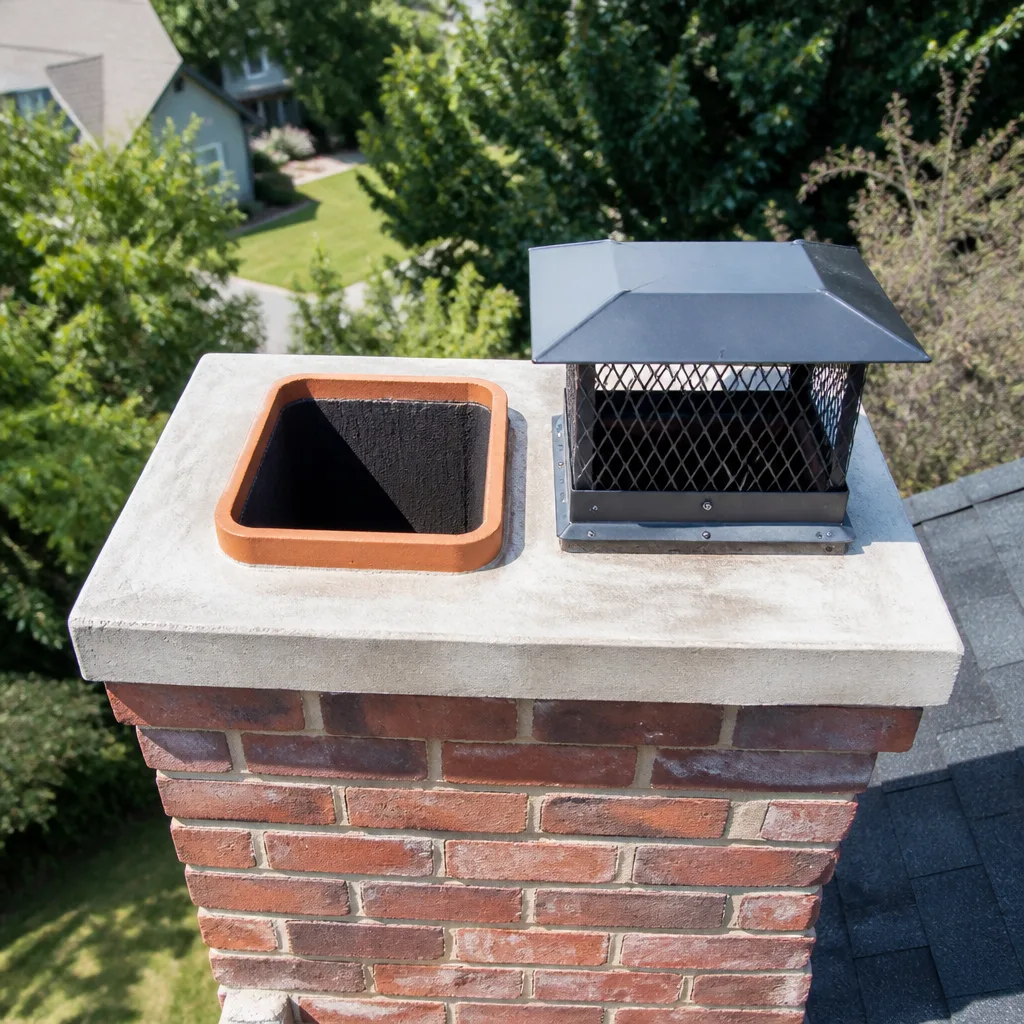
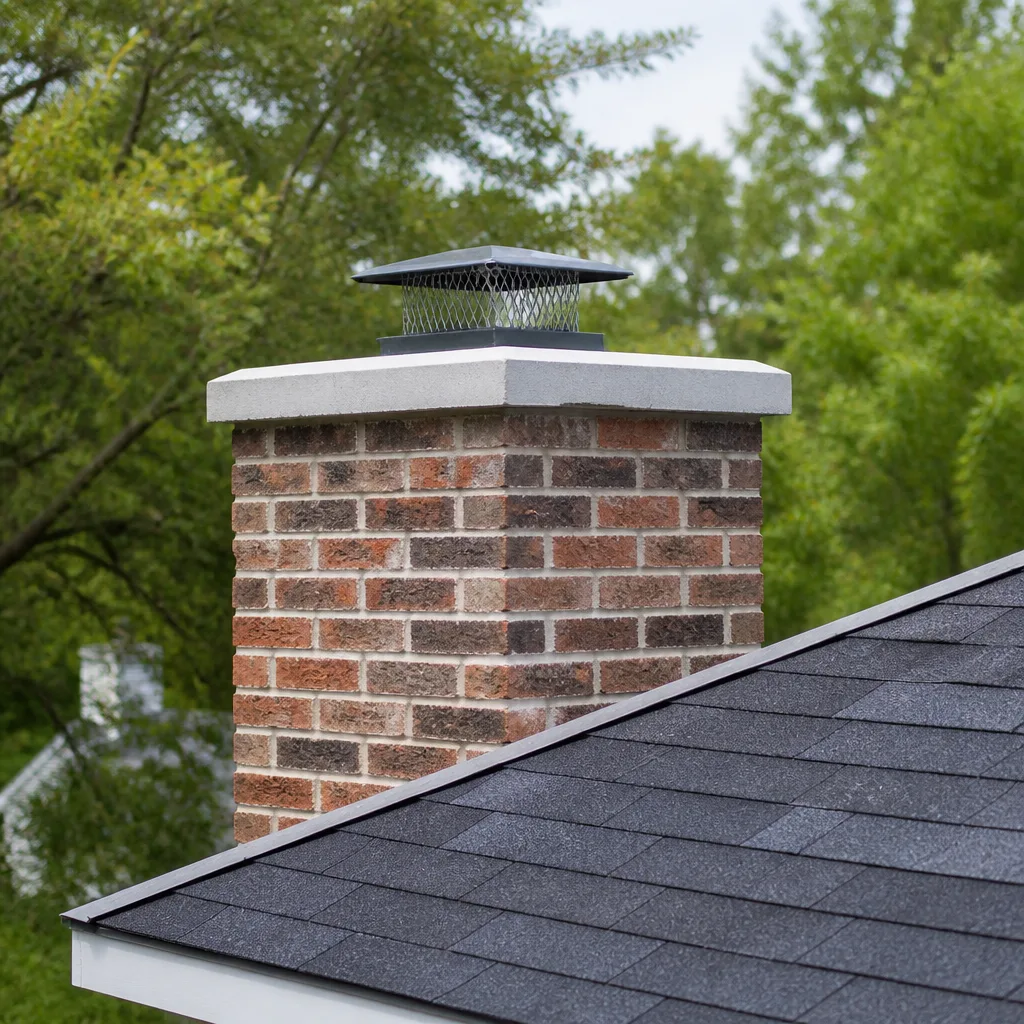
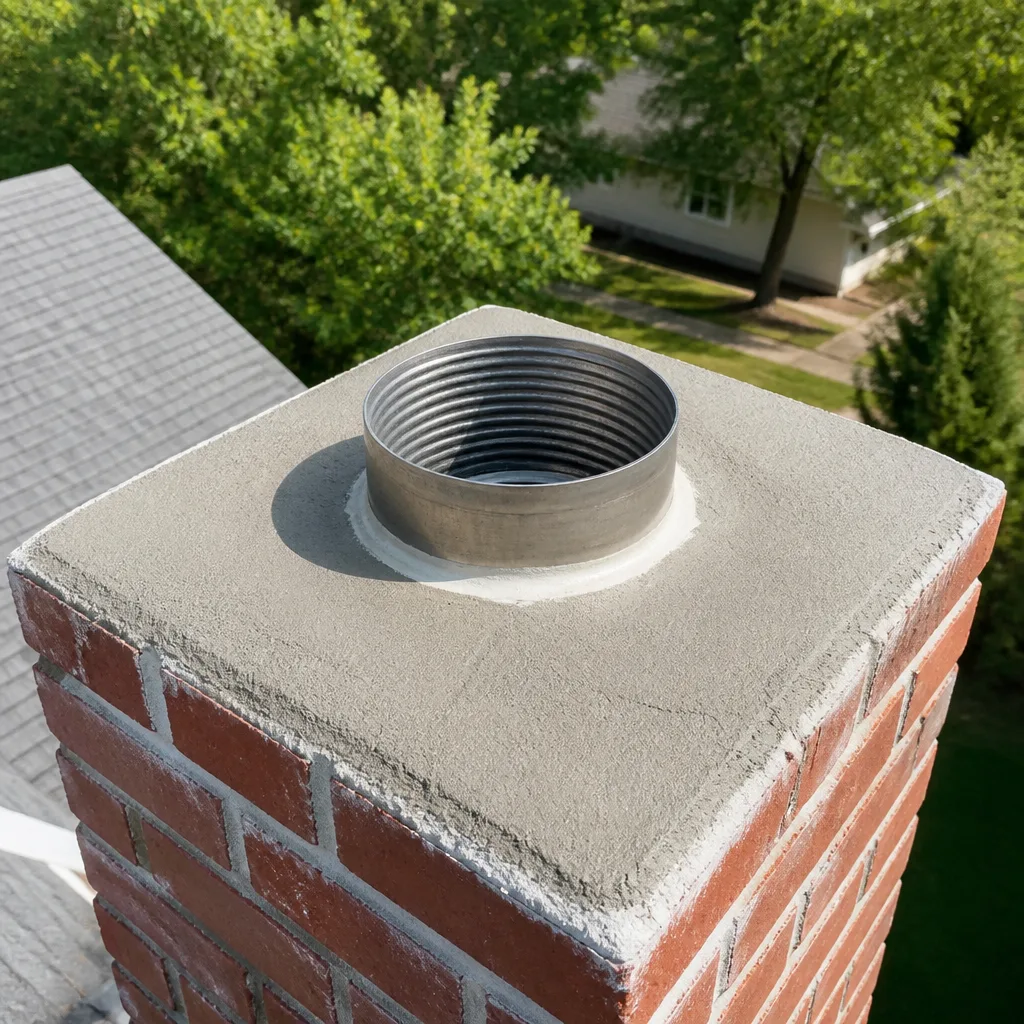
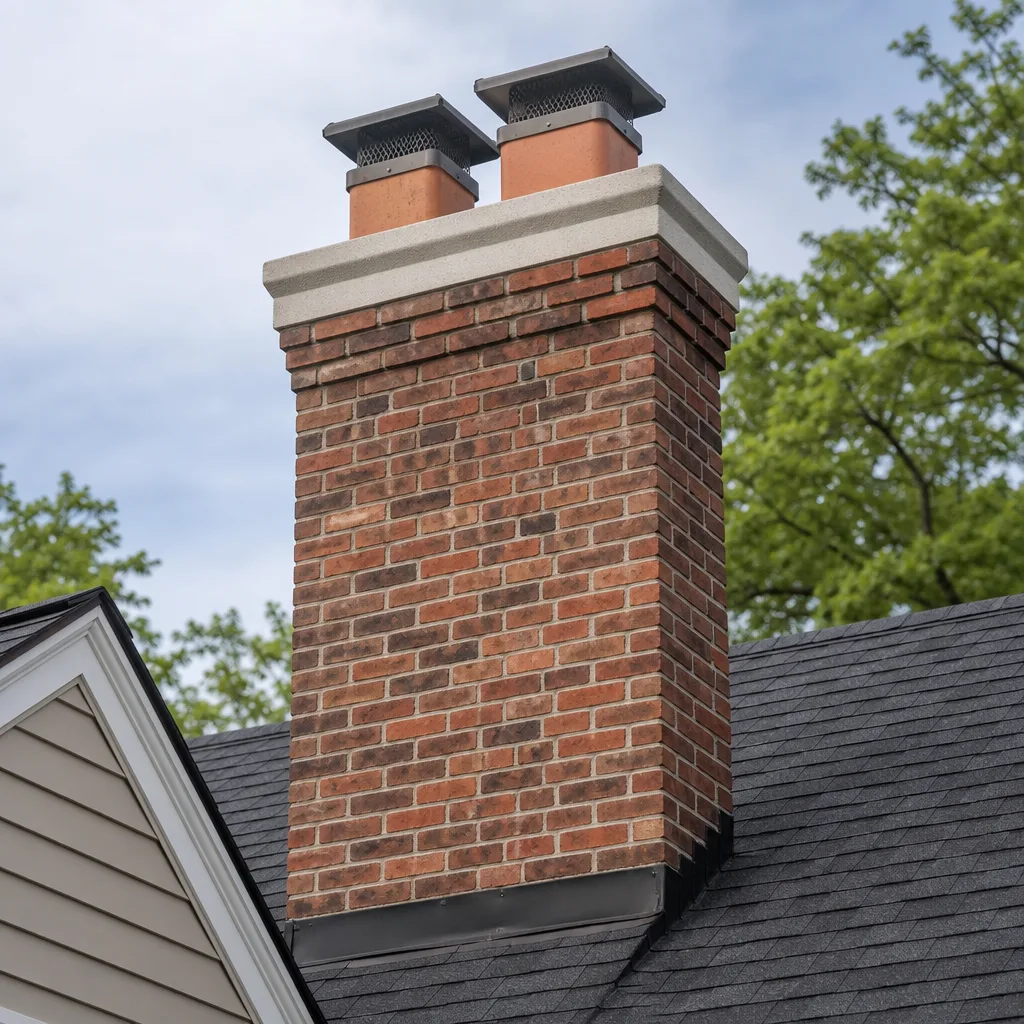
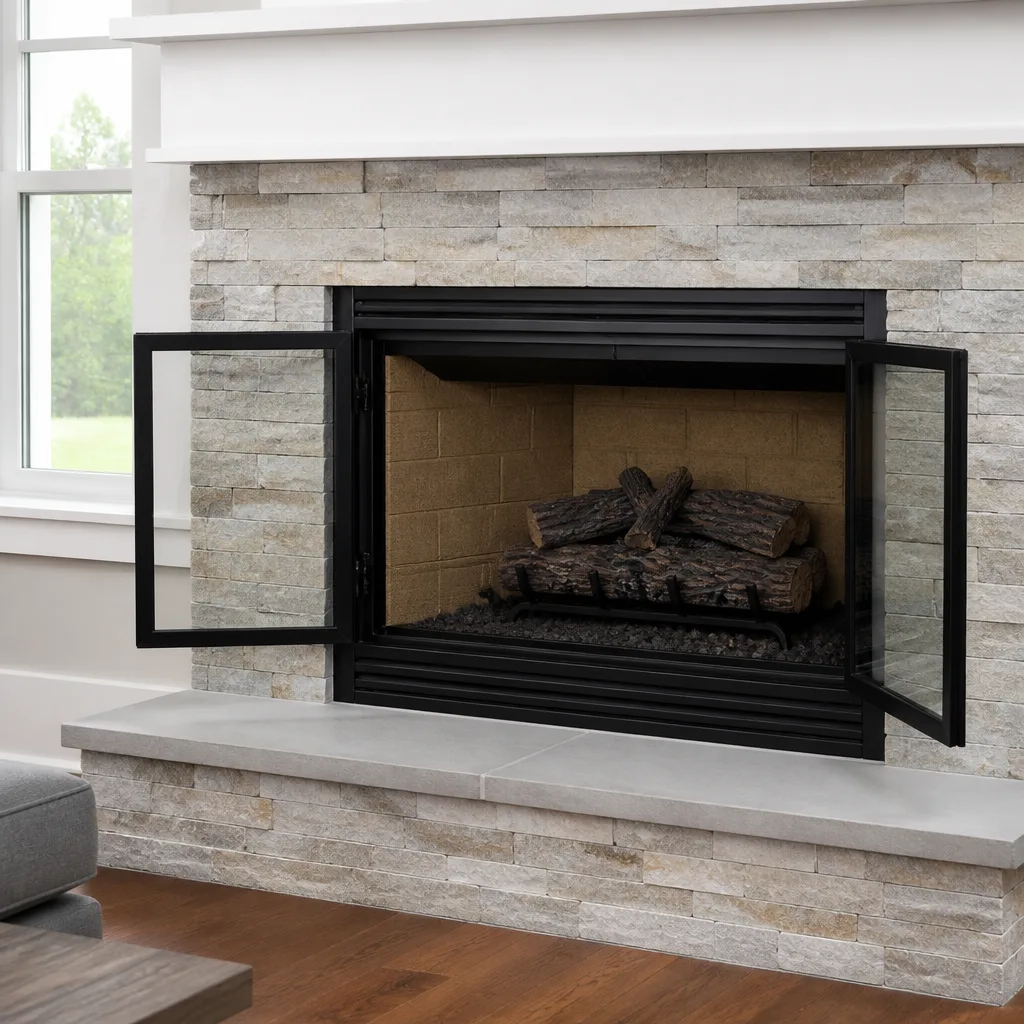
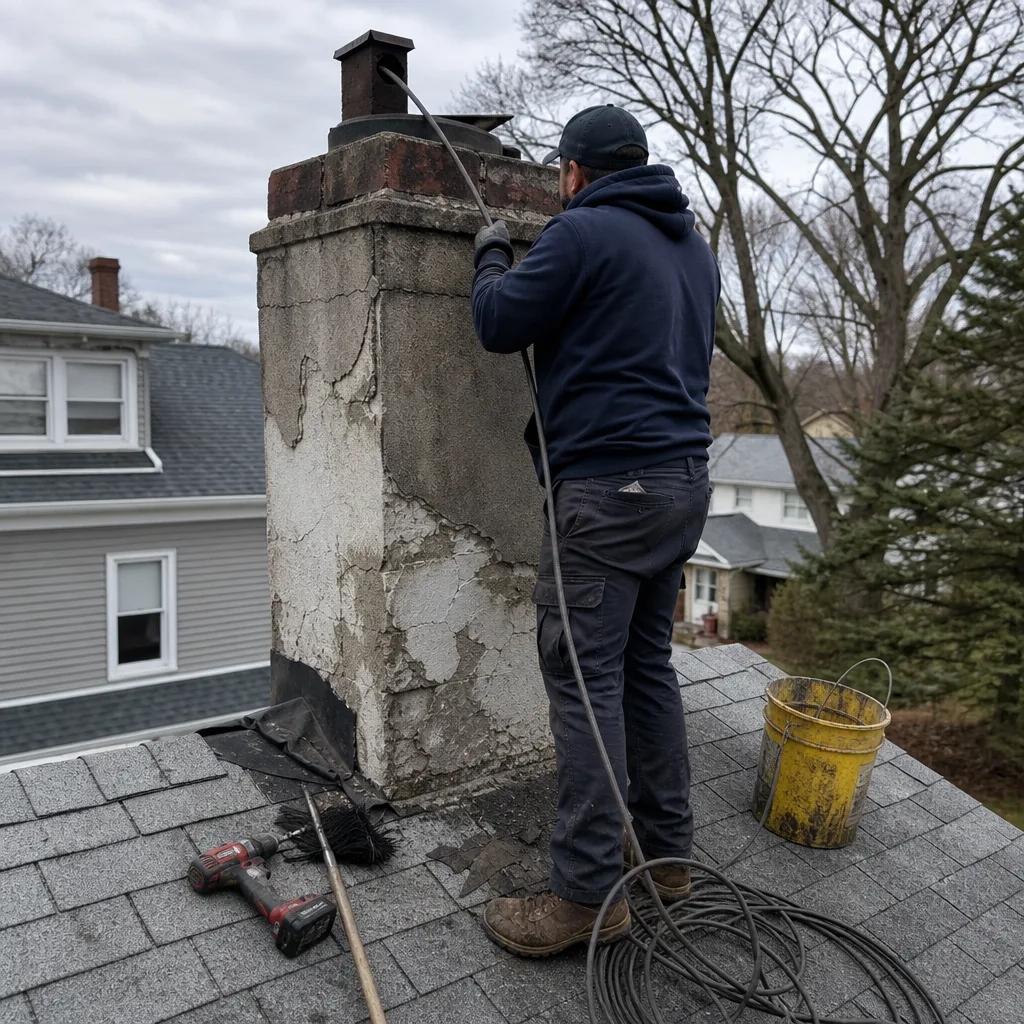 Before
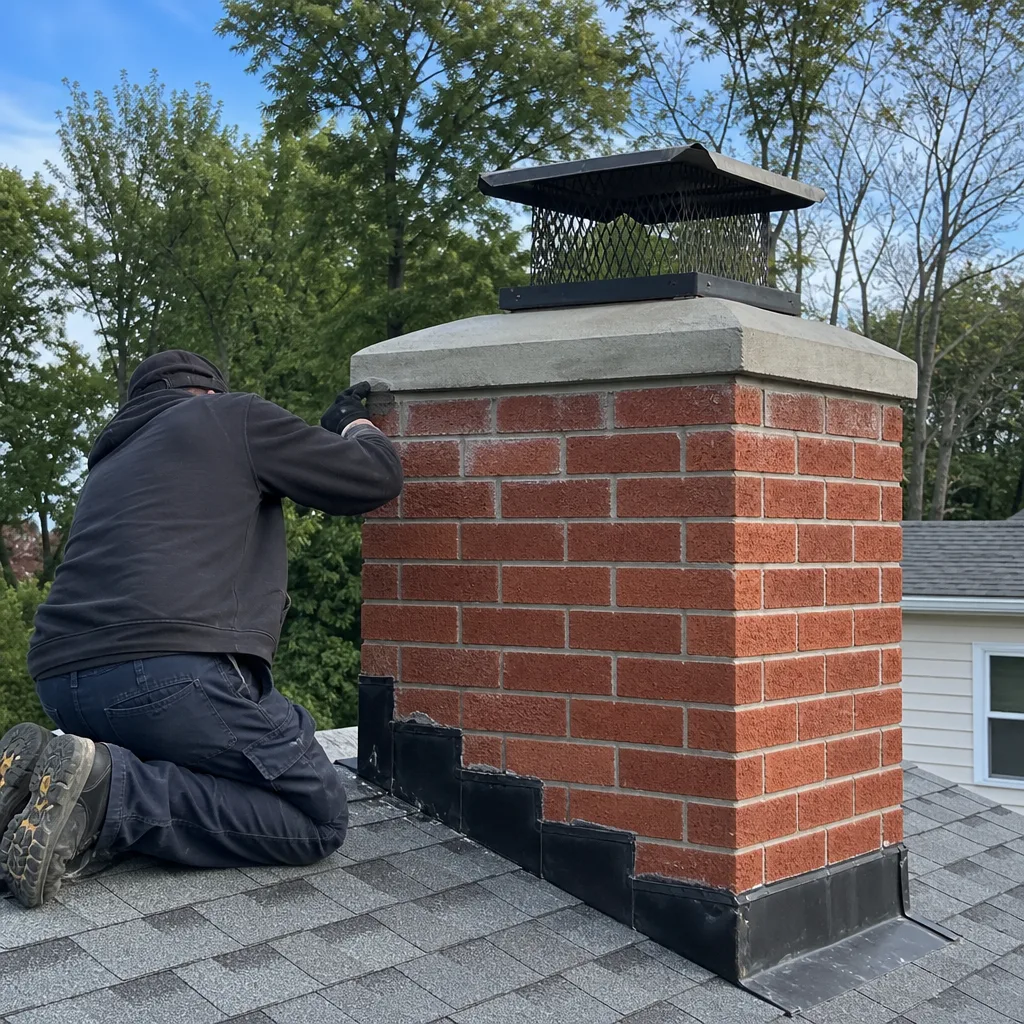 After
After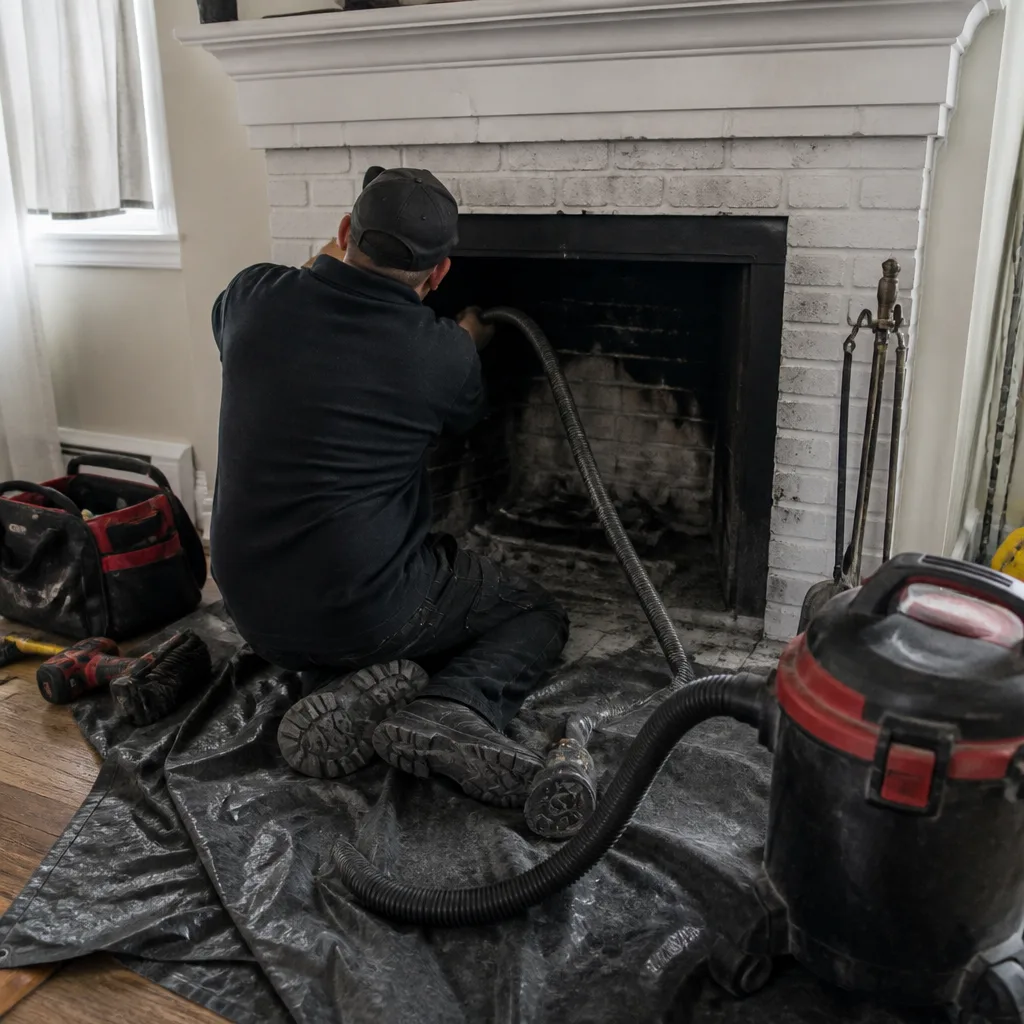 Before
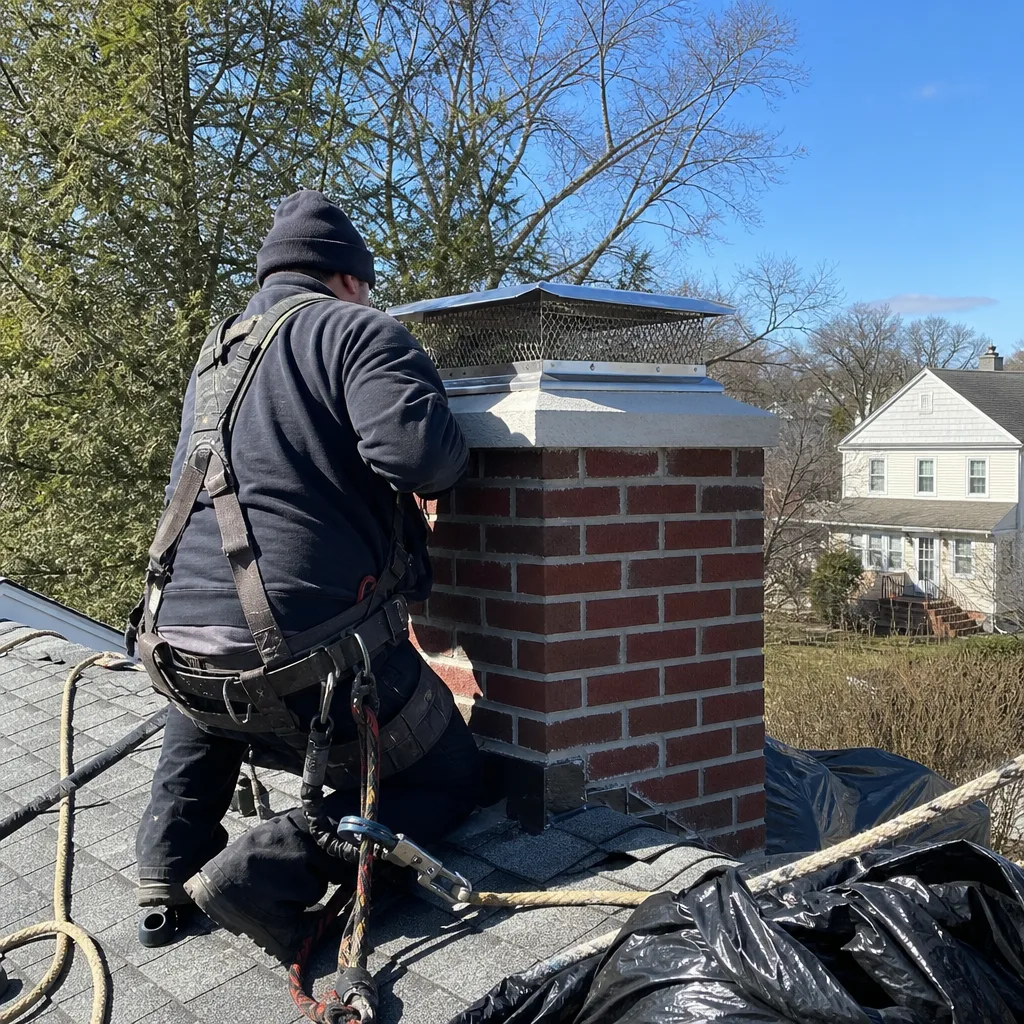 After
After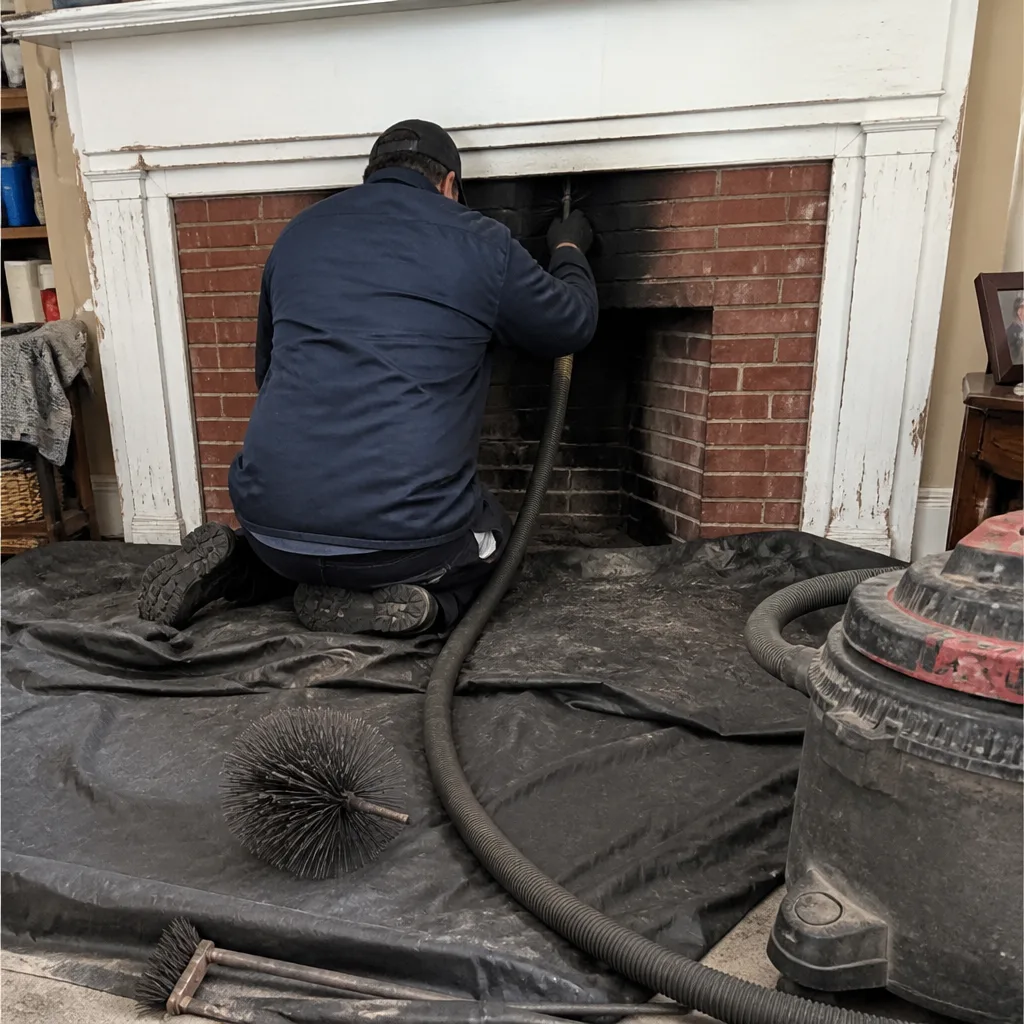 Before
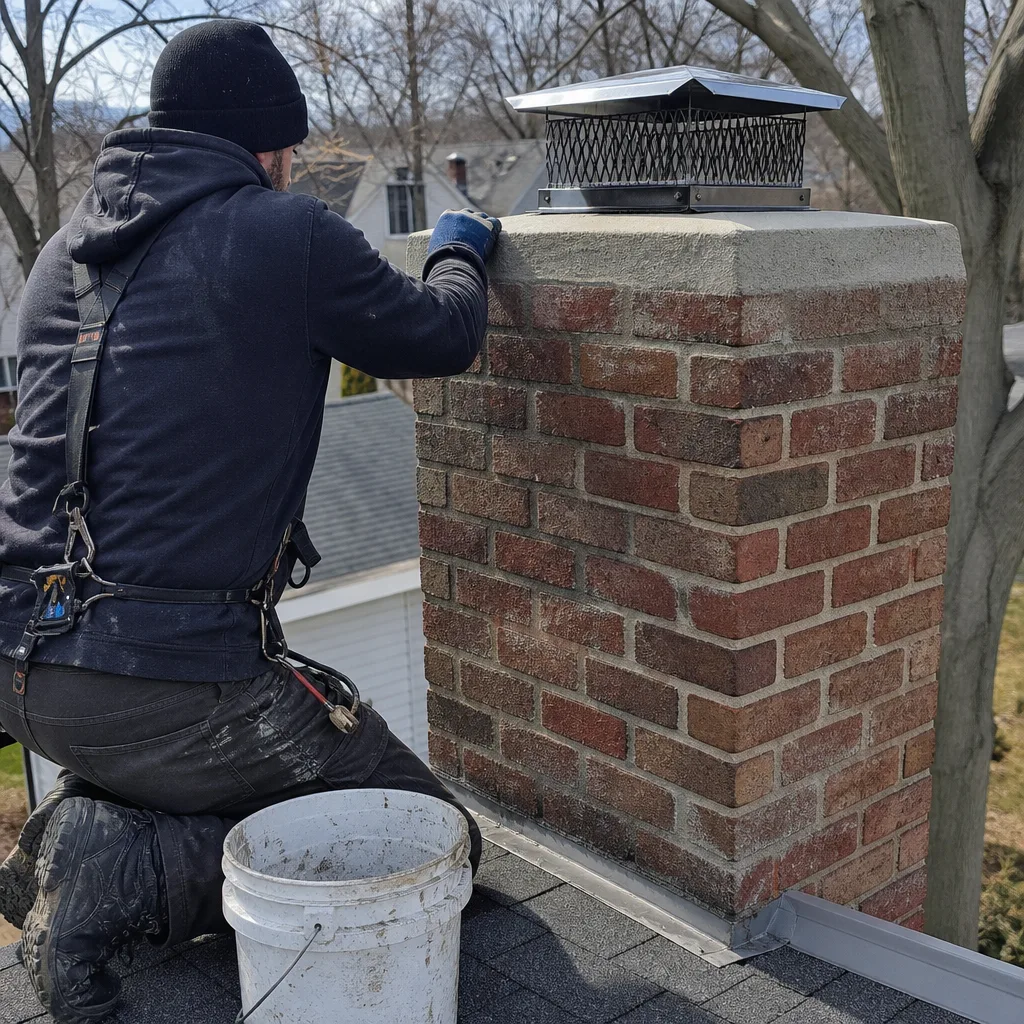 After
AfterChimney Cleaning Permits, Codes & Inspections in NY: What You Need to Know
A homeowner in Westchester County hired a contractor to reline a chimney without pulling a permit, sold the house three years later, and watched the deal collapse at closing when the inspector flagged the unpermitted work. This scenario plays out more often than any real estate agent will tell you upfront. In Mount Vernon, where housing stock dates back to the 1920s and chimneys have been through decades of freeze-thaw cycles, the gap between routine cleaning and code-triggering repair is narrower than most homeowners realize. This guide draws a clear line between what requires a permit and what doesn’t, explains how Mount Vernon’s building department actually handles chimney work, and shows why skipping the paperwork can cost far more than the permit fee ever would. For related reading, see our The Complete Guide to Chimney Cleaning in Mount Vernon.
Quick Answer
Routine chimney cleaning and sweeping in New York State do not require a building permit. However, liner replacement, firebox rebuilds, structural repairs, and new chimney construction all trigger permit requirements under the New York State Uniform Fire Prevention and Building Code and local amendments in Westchester County. In Mount Vernon, unpermitted chimney work must be disclosed to buyers and can void insurance claims if the work later fails.
Table of Contents
- What Chimney Work Requires a Permit in New York?
- How Mount Vernon’s Building Department Handles Chimney Permits
- NFPA 211: The Standard That Governs Everything
- CSIA Inspection vs. Code-Compliance Inspection: When You Need Both
- The Real Cost of Unpermitted Chimney Work
- How Unpermitted Work Affects Insurance and Home Sales
- What Mount Vernon Homeowners Should Do Before Hiring
- Common Mistakes to Avoid
- When to Call a Professional
- Frequently Asked Questions
What Chimney Work Requires a Permit in New York?
The New York State Uniform Fire Prevention and Building Code, adopted with local amendments by Westchester County, draws a sharp distinction between maintenance and modification. Understanding this line saves homeowners from both unnecessary paperwork and costly violations.
No Permit Required: Routine Maintenance
These activities are classified as maintenance and do not trigger permit requirements:
- Chimney sweeping and creosote removal
- Visual inspection without structural alteration
- Cap and crown cleaning
- Fireplace damper adjustment or replacement (same size, same location)
- Flue cleaning with brushes and rods
At Hearthstone Chimney Co. home, our standard seasonal tune-up falls squarely in this category. We document everything with photos, but no permit is needed because nothing structural changes.
Permit Required: Alteration and Repair
Once work alters the structure, materials, or venting capacity of the chimney system, permits become mandatory:
- Liner replacement or installation - changing from terra cotta to stainless steel, or installing a liner where none existed
- Firebox rebuild - replacing refractory panels or rebuilding with firebrick
- Crown reconstruction - removing and replacing the concrete crown (patching under 25% of surface area may be exempt in some jurisdictions, but Mount Vernon typically requires documentation)
- Chimney rebuilding above the roofline - partial or complete tear-down and reconstruction
- New chimney construction - any new masonry or metal chimney
- Thimble relocation or modification - changing the connection point for a wood stove or insert
- Chimney height alteration - extending or reducing height, which affects draft calculations
The permit threshold is not about the dollar value of the job. It is about whether the work changes the engineered performance of the system. A $200 damper replacement needs no permit. A $1,200 liner installation does, even if the contractor tries to call it a “cleaning with liner upgrade.”
The Gray Zone: What Mount Vernon Inspectors Actually Flag
In practice, Mount Vernon’s building department focuses on three triggers: structural change, fuel-type conversion, and venting-path modification. Converting a wood-burning fireplace to gas? Permit. Installing a pellet insert that uses the existing flue? Permit, because the venting characteristics change. Replacing a rusted chase cover with an identical stainless steel unit? Usually no permit, but smart contractors photograph the before condition.
We’ve seen homeowners in the Fleetwood and Chester Heights neighborhoods assume that because a job “looks small,” it escapes oversight. The building inspector who arrives for the final walk-through before sale does not share that assumption.
How Mount Vernon’s Building Department Handles Chimney Permits
Mount Vernon operates under Westchester County’s uniform code enforcement program, with local administrative procedures that differ slightly from neighboring cities like New Rochelle or Yonkers.
The Application Process
- Determine jurisdiction. Mount Vernon handles permits for structures within city limits. Properties in unincorporated Westchester fall to the county directly. Verify your address before starting.
- Submit application with plans. For liner work, a manufacturer specification sheet (DuraFlex, Olympia Chimney, or equivalent) and a simple diagram showing the flue path are typically sufficient. For rebuilds, structural drawings may be required.
- Pay permit fee. Fees scale with project valuation. A liner replacement typically runs $150-$400 in permit costs. Rebuilds scale higher.
- Schedule rough inspection. For concealed work like liners, an inspector must view the installation before closure. Missing this step means opening finished surfaces later.
- Final inspection and certificate of compliance. The completed work is inspected against the approved plans. The certificate becomes part of the property’s permanent record.
Inspection Timing Reality
Mount Vernon’s building department, like most in Westchester, operates on a schedule that rewards preparation and punishes improvisation. Rough inspections for chimney work are typically available within 3-5 business days of request, but during peak construction season (April through October), that can stretch to two weeks. Final inspections move faster, often within 48 hours.
The critical detail: rough inspections for liner work cannot be skipped. Once the liner is enclosed, the inspector cannot verify proper sizing, support spacing, or connection details. We have encountered situations in the South Side and North Side neighborhoods where a previous contractor’s failure to call for rough inspection forced a homeowner to pay for partial disassembly - or face a failed final inspection that delayed closing.
Contractor Licensing Requirements
Mount Vernon requires chimney contractors to hold a valid home improvement contractor license issued by the city or a Westchester County equivalent. The license must be current, and the permit application must name the licensed contractor who will perform the work. Homeowner permits for chimney work are technically possible but rarely advisable; most insurers and future buyers prefer - or require - licensed contractor documentation.
Our technicians carry license verification and provide permit application assistance as part of our standard process for permit-triggering jobs. The number on the estimate includes this coordination; there are no surprises on the bill.
NFPA 211: The Standard That Governs Everything
The National Fire Protection Association’s Standard for Chimneys, Fireplaces, Vents, and Solid Fuel-Burning Appliances - NFPA 211 - is the technical backbone beneath New York’s building code. Local inspectors do not enforce NFPA 211 directly; they enforce the building code, which incorporates NFPA 211 by reference. But understanding the standard explains why certain requirements exist and why disputes between homeowners and insurers often hinge on its provisions.
Key NFPA 211 Requirements for Homeowners
- Annual inspection. Chimneys, fireplaces, and vents shall be inspected at least once a year. This is the basis for our Chimney Cleaning & Sweep in Mount Vernon recommendation.
- Level 2 inspection trigger. A Level 2 inspection - including video scanning of the flue interior - is required upon sale or transfer of property, after chimney fire or operational malfunction, and before liner installation or replacement.
- Liner sizing. Flue liners must be properly sized for the appliance they serve. An oversized flue for a modern, efficient insert causes condensation and creosote accumulation. An undersized flue creates draft problems and spillage.
- Masonry clearance. Masonry chimneys must maintain minimum clearances to combustibles: typically 2 inches for exterior walls, with specific requirements for chimney chases and framed enclosures.
- Factory-built chimney standards. Metal chimneys must be listed to UL 103 or UL 103HT and installed per manufacturer instructions, not field-modified.
How NFPA 211 Interacts with Mount Vernon Enforcement
When a Mount Vernon building inspector examines chimney work, they verify code compliance. But when an insurance adjuster evaluates a chimney fire claim, or when a home inspector reports to a buyer, they frequently reference NFPA 211 directly. This creates a two-layer compliance environment: code for the permit, standard for the ongoing duty of care.
We document our Level 2 inspections to NFPA 211 criteria using camera systems that capture the full flue circumference. In Mount Vernon’s older housing stock - particularly the pre-war brick colonials in the vicinity of Gramatan Avenue and the Tudor revivals near Memorial Field - we regularly find original terra cotta flues that meet historical code but fall short of current NFPA 211 sizing for modern heating appliances. This is not a code violation in itself, but it is a condition we flag because it affects both safety and insurability.
The Climate Factor: Westchester’s Freeze-Thaw Cycle
NFPA 211 addresses fire safety, not masonry durability. But Mount Vernon’s climate - average winter lows in the mid-20s, frequent freeze-thaw cycles, and driving rain from Long Island Sound storms - creates conditions that accelerate chimney deterioration. A flue that passes NFPA 211 inspection in October may have deteriorated significantly by March if water infiltration has accelerated spalling and liner cracking.
This is why we recommend inspection timing that accounts for seasonal exposure, not just calendar compliance. A chimney that “passed” last year in a mild winter may not pass this year after a hard freeze sequence.
CSIA Inspection vs. Code-Compliance Inspection: When You Need Both
Homeowners often confuse two distinct inspection types with similar names. The confusion costs money and creates false confidence.
CSIA-Certified Chimney Inspection
The Chimney Safety Institute of America certifies sweeps to perform three levels of inspection:
- Level 1: Visual examination of readily accessible portions. Appropriate for annual maintenance when no changes have occurred.
- Level 2: Video scanning of internal surfaces, accessible portions of attics and basements, and evaluation of clearances. Required for property transfers, after chimney fires, and before liner installation.
- Level 3: Destructive inspection involving removal of building components to access concealed areas. Reserved for suspected serious hazards.
CSIA inspections are performed by private, certified professionals. They produce a report for the homeowner’s use. They do not create a government record, and they do not certify code compliance.
Code-Compliance Inspection
Code-compliance inspections are performed by Mount Vernon building department employees or their designated agents. They verify that permitted work matches approved plans and meets code requirements. They produce a certificate of compliance or occupancy endorsement that becomes part of the property’s permanent file.
When You Need Both
| Scenario | CSIA Inspection Needed | Code Inspection Needed |
|---|---|---|
| Annual cleaning, no changes | Level 1 | No |
| Buying a home in Mount Vernon | Level 2 (strongly recommended) | No, unless seller discloses recent work |
| Installing stainless liner | Level 2 (before and after) | Yes - rough and final |
| Firebox rebuild after chimney fire | Level 3 (damage assessment) | Yes - structural review likely |
| Selling after recent liner replacement | Level 2 (buyer confidence) | Yes - certificate required for disclosure |
The CSIA inspection tells you what condition your chimney is in. The code inspection tells the next buyer that any work was done legally. In Mount Vernon’s competitive real estate market, where buyers often waive inspection contingencies in hot markets but lawyers scrutinize disclosures in cooling ones, having both documents removes a significant transaction risk.
Our Chimney Repair in Mount Vernon process includes CSIA-standard documentation on every job, and we coordinate code inspections for all permit-triggering work. Photos you can see, a plain-English verdict - documented like an engineer, explained like a craftsman.
The Real Cost of Unpermitted Chimney Work
The permit fee for a liner replacement in Mount Vernon is typically under $400. The cost of unpermitted work, discovered later, routinely runs into thousands - or tens of thousands - in delayed sales, emergency repairs, and legal fees.
The Hidden Costs
- Retroactive permitting. If unpermitted work is discovered, Mount Vernon may require full plan submission, sometimes with engineer stamps, plus payment of back fees with penalties. The work may need partial disassembly for inspection.
- Redo work. If the original installation does not meet current code - common with contractor-grade materials or improvised methods - the entire job may need replacement. We have removed “new” liners that were improperly sized, unsupported, or terminated incorrectly, all installed without permits.
- Neighboring system damage. In multi-family housing common in Mount Vernon’s downtown and southern wards, an improperly vented chimney can backdraft into adjacent units, creating liability exposure far exceeding the original job cost.
- Insurance denial. If an unpermitted liner fails and causes fire or water damage, the insurer may deny the claim based on failure to comply with code requirements, even if the immediate cause was unrelated to the permit status.
The Contractor Incentive to Skip Permits
Unpermitted work is faster to schedule, requires no coordination with inspection availability, and avoids the contractor’s need to maintain current licensing and insurance documentation. It also frequently indicates a contractor who plans to be unreachable when problems arise. In 42 years of serving Westchester County, we have never seen a permit-skipping contractor who was still operating under the same name five years later when the homeowner needed warranty service.
The 90-Day Done Right Promise - our Keystone Standard - is backed in writing with no arguing. But it only applies to work we performed, and we only perform work that meets permit requirements when permits are required. This is not bureaucracy. It is how a company that plans to be in town in thirty more years acts accordingly.
How Unpermitted Work Affects Insurance and Home Sales
New York State’s Property Condition Disclosure Act requires sellers to disclose known defects and code violations. The form specifically asks about “work performed without required permits.” Answering “no” when unpermitted chimney work exists is fraud. Answering “yes” without a plan for remediation typically triggers buyer concessions or deal collapse.
The Title Problem
Title insurance does not cover unpermitted work. When a closing attorney reviews the property file and finds no certificate of compliance for visible chimney modifications, the buyer’s lender may refuse to fund until the gap is closed. In a recent Mount Vernon case we consulted on, a $12,000 liner installation from 2019 - performed without permit - delayed a $685,000 sale for six weeks. The eventual cost to remediate: $4,200 in engineering, permit, and inspection fees, plus the seller’s carrying costs and legal fees.
Insurance Claim Scenarios
Homeowners insurance policies contain standard exclusions for losses resulting from “faulty, inadequate, or defective design, materials, or workmanship.” Insurers interpret unpermitted work as strong evidence of defective workmanship, shifting the burden to the homeowner to prove otherwise. After a chimney fire, this means:
- The adjuster photographs the chimney system.
- The insurer requests permit history from Mount Vernon building department.
- No permit is found for recent liner or rebuild work.
- The insurer denies or limits the claim, citing failure to maintain the property to code standards.
- The homeowner must sue the original contractor - if traceable - or absorb the loss.
We document every Fireplace Services in Mount Vernon job with permit numbers when applicable, and we provide homeowners with copies of all compliance certificates. When the unexpected happens, paperwork matters.
What Mount Vernon Homeowners Should Do Before Hiring
Due diligence on a chimney contractor is not complicated, but it must be specific. These steps protect against the permit-skipping operator who leaves a trail of title problems.
Verification Checklist
- Request license verification. Ask for the Mount Vernon or Westchester County home improvement contractor license number. Verify it with the issuing authority. A current license is required for permit application.
- Confirm insurance. Request a certificate of insurance showing general liability and workers compensation. Call the insurer to verify current status.
- Ask the permit question directly. “Will you pull all required permits for this job, and is the permit fee included in your estimate?” Any hesitation, deflection, or suggestion that the homeowner “can save money by skipping it” is a disqualifier.
- Request manufacturer documentation. For liner work, the contractor should specify the brand and model - DuraFlex, HeatShield, Gelco, or Olympia Chimney - and provide installation instructions showing code compliance.
- Verify inspection coordination. The contractor should schedule rough and final inspections, not leave this to the homeowner. Ask how they handle inspector availability and what happens if inspection reveals a required correction.
- Get the warranty in writing. Verbal promises evaporate. Our 90-Day Done Right Promise is in writing, no arguing, because we intend to honor it.
Red Flags Specific to Mount Vernon
Be alert for contractors who:
- Quote liner installation without mentioning permit requirements
- Offer “cash discounts” that correspond roughly to permit fee amounts
- Cannot name the specific liner brand or provide manufacturer specs
- Claim “we’ve done hundreds in Mount Vernon, never needed a permit” - false for any liner or rebuild work
- Pressure for immediate decision with “this week only” pricing
The steady craftsman has no need for pressure tactics. We’ll be there when we say, and the number on the estimate is the number on the invoice.
Common Mistakes to Avoid
- Assuming cleaning includes code inspection. A CSIA sweep’s Level 1 inspection evaluates condition, not permit status. The building department’s code inspection evaluates compliance, not maintenance needs. They are complementary, not interchangeable.
- Accepting “permit optional” advice. In Mount Vernon, there is no permit-optional category for liner work or rebuilds. A contractor who suggests otherwise is either ignorant or dishonest. Neither qualifies for access to your roof.
- Failing to verify rough inspection completion. For concealed work, the rough inspection is the critical control point. Homeowners should request documentation - a signed inspection card or electronic confirmation - before allowing enclosure.
- Neglecting to transfer compliance certificates. When buying a home with recent chimney work, request the certificate of compliance from the seller. If none exists, assume the work was unpermitted and negotiate accordingly.
- Confusing home inspector opinion with code authority. A home inspector may note “chimney appears in good condition” while missing that the liner was replaced without permit. Their scope is visual and general, not jurisdictional.
- Waiting for sale to discover problems. The worst time to learn about unpermitted work is when the buyer’s attorney raises it. Proactive permit verification, especially in Mount Vernon’s older neighborhoods where multiple owners may have done work, prevents closing surprises.
- Hiring based on lowest price without permit verification. A permit-compliant bid includes coordination time, inspection scheduling, and potential correction work. A low bid that omits these is not comparable. It is a different product entirely.
When to Call a Professional
Call a certified chimney professional when your annual inspection reveals conditions beyond routine maintenance, when you are buying or selling a home in Mount Vernon, or when you suspect previous work may have been done without proper permits. Our Chimney Cleaning & Sweep Maintenance Checklist for Mount Vernon Homeowners can help you prepare. Signs that warrant immediate professional evaluation include visible spalling brick, water stains on interior chimney walls, draft problems that worsen after weather events, or any work performed by a previous owner that lacks documentation.
Hearthstone Chimney Co. offers free estimates in Mount Vernon - call (914) 246-5794. Our Level-2 camera inspections end with photos you can see and a plain-English verdict. For permit-triggering work, we handle the application, coordinate inspections, and provide compliance certificates that transfer cleanly to the next owner. Explore more guides & resources on our blog. Done right - and we stand behind it.
Frequently Asked Questions
No. Chimney sweeping, creosote removal, and standard visual inspection are classified as maintenance and do not require a building permit anywhere in New York State, including Mount Vernon. Call (914) 246-5794 for an exact quote - estimates are free.
Permit fees for chimney liner replacement typically range from $150 to $400 depending on project valuation. Rebuilds and new construction scale higher. The fee is minor compared to the cost of retroactive permitting or failed real estate transactions. Call (914) 246-5794 for an exact quote - estimates are free.
If your terra cotta flue is cracked, spalled, or improperly sized for your current appliance, cleaning alone does not restore safety or code compliance. We document flue condition with camera inspection and provide photos you can see before recommending any work. Some conditions can be monitored; others require immediate action. Call (914) 246-5794 for an exact quote - estimates are free.
NFPA 211 recommends annual inspection, with sweeping frequency determined by use and fuel type. In Mount Vernon, where many homeowners burn wood for supplemental heat through extended heating seasons, annual sweeping is prudent. The freeze-thaw cycle also accelerates masonry deterioration that inspection catches early. Call (914) 246-5794 for an exact quote - estimates are free.
You must disclose it on the New York State Property Condition Disclosure form. Failure to disclose is fraud. Even with disclosure, buyers typically demand remediation, price reduction, or escrow holdback. In competitive markets, the disclosure alone can drive buyers to cleaner alternatives. Call (914) 246-5794 for an exact quote - estimates are free.
Homeowner permits are technically available but rarely advisable for chimney work. Most insurers and buyers prefer licensed contractor documentation, and the technical requirements for liner sizing, clearances, and support are not intuitive. The cost savings are minimal compared to the liability exposure. Call (914) 246-5794 for an exact quote - estimates are free.
The Bottom Line
Routine chimney cleaning needs no permit in New York, but the work that cleaning reveals - liner replacement, firebox rebuild, structural repair - almost always does. In Mount Vernon, skipping the permit process saves a few hundred dollars upfront and risks thousands in delayed sales, insurance disputes, and emergency remediation. The building department’s inspection process is straightforward when handled by a licensed contractor who coordinates properly. The CSIA inspection and code-compliance inspection serve different purposes, and prudent homeowners maintain documentation for both. Before hiring any chimney contractor, verify license, insurance, and permit protocol. The steady craftsman welcomes this scrutiny. We have for over 42 years.
Written by Russell Haines, Owner at Hearthstone Chimney Co., serving Mount Vernon since 2014.